The Vaginal Microbiome: A Mysterious Guardian of Women’s Health
The vaginal microbiome is a delicate yet essential ecosystem for women’s well-being. When in balance, beneficial bacteria protect against infections. But when disrupted, symptoms can arise—discharge, burning, or recurrent yeast infections. Curious about what affects vaginal microbiome health and how to maintain its balance? You’re in the right place—we bring you detailed, expert information to help you better understand this delicate system.

Why care about the vaginal microbiome?
The statistics are clear - up to 75% of women will experience a yeast infection at least once in their lifetime, and approximately half of these women experience recurrent recurrences (Pino et al., 2023). Frequent infections, discharge, burning or discomfort can become a chronic problem - unless the real cause is addressed.
Vaginal health is not just a matter of good hygiene or an occasional visit to the gynecologist. It is a complex and finely balanced ecosystem, the state of which can greatly affect a woman's comfort, self-esteem and quality of life. A key protective role in this ecosystem is played by the vaginal microbiome - a collection of microorganisms, mainly bacteria, that naturally populate the vagina and protect it from pathogens.
What is the vaginal microbiome?
The vaginal microbiome is a complex set of microorganisms that naturally inhabit a woman's vagina. Unlike the gut microbiome, which is highly diverse, the vaginal microbiome has low diversity. In general, women of reproductive age are dominated by bacteria of the genus Lactobacillus (Ravel et al., 2011).
These bacteria are thought to maintain the acidic pH of the vagina, thereby protecting against pathogenic microorganisms. The bacteria produce lactic acid, hydrogen peroxide and other antimicrobial substances that slow the growth of harmful microorganisms. A reduction in the number of these beneficial bacteria can lead to dysbiosis - a disturbance in the natural balance of bacteria - which increases the risk of infections such as bacterial vaginosis, yeast infections or sexually transmitted infections.
Why are bacteria of the genus Lactobacillus so important?
These "friendly bacteria" have several protective functions:
- they produce lactic acid, which keeps the pH in the vagina between 3.8 and 4.5, creating an unfavorable environment for pathogenic bacteria and yeast,
- some species (e.g. L. crispatus, L. jensenii) also produce hydrogen peroxide (H₂O₂) and bacteriocins - natural substances with antimicrobial activity,
- actively involved in regulating immunity and maintaining a healthy vaginal mucosa (Kwon & Lee, 2022).
What happens when the balance is disturbed?
When lactobacilli are depleted (e.g. after antibiotic treatment, hormonal fluctuations, excessive hygiene or stress), a condition called vaginal dysbiosis develops. In such an environment, unwanted microorganisms can proliferate, such as:
- Gardnerella vaginalis - the main causative agent of bacterial vaginosis (BV),
- Candida albicans - the yeast responsible for vaginal mycoses,
- Chlamydia trachomatis, Trichomonas vaginalis - sexually transmitted pathogens.
Dysbiosis can take place without visible symptoms, but it still increases the risk of various health problems - for example, inflammation, urinary tract infections or even premature birth. In other cases, it may manifest itself in unpleasant odour, discharge, itching or general discomfort in the intimate area (Ravel et al., 2011; Kwon & Lee, 2022).

Fig. 1: Vaginal microorganisms in a balanced vaginal environment versus the stage of dysbiosis in the vagina (Fong et al., 2024).
Hormones, pH and vaginal health: how are they related?
The environment in the vagina is not constant, on the contrary, it is very dynamic and changes throughout a woman's life. The health of the vagina depends not only on good hygiene, but above all on the balance of the vaginal microbiome, which ideally acts as a protector against infections. A key factor in maintaining this balance is female hormones, especially estrogen.
When estrogen levels are at optimal levels (for example, during reproductive age), it promotes glycogen production in the vaginal epithelium. This glycogen serves as food for beneficial bacteria - primarily lactobacilli, which in turn produce lactic acid. This keeps the pH in the vagina in the acidic range (3.8-4.5), which prevents the overgrowth of harmful bacteria and yeasts. This natural defence mechanism plays a key role in maintaining the balance of the vaginal microbiome and also acts as an effective prevention against various inflammations and infections.
What happens if estrogen levels drop?
If estrogen levels drop (e.g. during menopause, while breastfeeding or as a result of taking certain types of contraception), glycogen production will decrease. This weakens the vaginal defences, increases the pH and can lead to vaginal dysbiosis - an imbalance between 'good' and 'bad' bacteria. This can result in more frequent inflammation, infections, dryness or discomfort.
Menopause: Hormonal silence and the path to a new balance
The menopause period is sometimes figuratively referred to as hormonal silence - estrogen levels drop significantly and the body enters a new hormonal balance. Menopause represents a significant milestone in a woman's life that brings about complex changes - including in the area of intimate health. With the drop in estrogen come specific symptoms such as vaginal dryness, itching, burning, more frequent infections or reduced tissue elasticity. These symptoms are associated with reduced glycogen production and subsequent loss of lactobacilli, leading to increased vaginal pH and disruption of the microbiota.
Although hormonal changes are a natural part of menopause, there are substances that can help to promote the natural balance and alleviate some of the symptoms. One of these is oleuropein, a polyphenol found in the leaves of the olive tree (Olea europaea), known particularly for its anti-inflammatory, antioxidant and antimicrobial effects.
According to a study by Qabaha et al. (2017), oleuropein significantly reduces inflammatory markers and has an immunomodulatory effect. In another review study, Omar (2010) describes its broad pharmacological actions, including its ability to protect cells from harmful substances (free radicals) and inhibit the growth of harmful microorganisms.
These properties may also be potentially beneficial during menopause, when the natural mucosal defences are weakened. While direct clinical evidence of oleuropein's effect on vaginal tissue during menopause is lacking, its known anti-inflammatory and antimicrobial properties make it a promising ingredient for supporting intimate health - for example, as part of nutritional supplements or topical care.
Oleuropein thus represents a promising helper in supporting intimate health during menopause - especially as part of comprehensive care that respects the changing needs of the female body.
When hormones swirl water: How does PMS affect intimate balance?
Hormonal fluctuations before menstruation have a significant impact not only on mood, but also on vaginal health. During the second half of the menstrual cycle, especially in the pre-menstrual period, estrogen levels drop, which can affect both the composition of the vaginal microbiota and vaginal pH values. This subtle shift in balance is experienced by some women as increased discharge, irritation or discomfort in the intimate area. Supporting the microbiota therefore plays an important role in a holistic approach to PMS.
In addition to the microbiome itself, overall hormonal balance and psychological well-being play a large role in women's intimate health. During the menstrual cycle, but also during menopause or periods of stress, mood swings, irritability and tension can be associated with hormonal changes.
One natural substance that can bring relief during this period is saffron (Crocus sativus L.) - known for its naturally calming effects. Clinical studies show that saffron can help improve mood, relieve premenstrual symptoms and promote mental resilience.
Mental well-being is not separate from physical health - it is also closely linked to the balance of the gut and vaginal microbiome. It is stress and hormonal fluctuations that can disrupt this balance (Agha-Hosseini et al., 2008; Hausenblas et al., 2013).
Thanks to its saffron content, LADYbiom+® brings a more holistic approach to women's health - not only supporting the vaginal microbiome, but also psychological well-being during hormonal fluctuations.
Why is the vaginal microbiome the key to women's health and how to keep it in balance?
The vaginal microbiome is like the silent guardian of women's health. It is made up of a complex community of microorganisms, especially beneficial lactobacilli, which maintain the natural pH of the vagina, protect against infections and promote overall gynaecological balance. However, when this balance is disturbed, the consequences are not long in coming - unpleasant odour, recurrent infections, inflammation or even fertility problems.
What disrupts the vaginal microbiome?
Unfortunately, the microbiome is very sensitive and its stability can be affected by a number of factors - often even those that we consider part of our normal routine. Let's take a look at the most common "disruptors":
- Antibiotics - although effective against bacterial infections, they not infrequently destroy good bacteria, including those that protect the vagina.
- Hormonal fluctuations - menstruation, pregnancy, breastfeeding, menopause, or even birth control change estrogen levels, which affect the production of glycogen - the main "fuel" for lactobacilli.
- Intimate hygiene - excessive or inappropriate hygiene, rinses, perfumed products and aggressive soaps can disrupt the natural microbiota.
- Lifestyle - factors such as stress, lack of sleep, synthetic underwear, processed foods, low intake of probiotics and fibre weaken the body's defences and the microbiome.
What happens when the vaginal microbiome is disrupted?
A decrease in lactobacilli, which can occur for example after antibiotic treatment, hormonal changes, stress or improper hygiene, often leads to dysbiosis - an imbalance of the vaginal microbiome. This condition disturbs the balance of the microbial population in the vagina and creates favourable conditions for the overgrowth of undesirable microorganisms(Gardnerella vaginalis, Candida albicans, etc.).
Optimizing the vaginal microbiome is crucial for any woman who wants to prevent recurrent infections, support her intimate health and maintain the natural balance of the microbiota.
What are the specific manifestations of vaginal dysbiosis?
The main symptoms of vaginal dysbiosis include increased discharge with a characteristic smell that worsens after intercourse or menstruation. Furthermore, itching, burning and irritation of the mucous membrane appear, which can negatively affect the quality of life of a woman.
Does dysbiosis always have to be symptomatic?
Although the aforementioned symptoms are often the first impulse to seek medical attention, dysbiosis does not always have to be symptomatic (Verstraelen & Swidsinski, 2019). Asymptomatic vaginal dysbiosis is a hidden problem that can increase the risk of developing inflammatory conditions, sexually transmitted infections, and pregnancy complications.
How do I know if I have vaginal dysbiosis?
Diagnosis of vaginal dysbiosis is not based solely on clinical symptoms, as asymptomatic forms are common. For accurate detection, microbiological methods are used in medicine, including microscopic examination of vaginal secretions according to the Nugent scale, as well as molecular techniques such as PCR or 16S rRNA sequencing (Onderdonk et al., 2016).
Probiotics as prevention of vaginal dysbiosis: yes or no?
The question probably occurred to you while reading this article: "Is taking probiotics necessary even if I don't experience any symptoms?"
Prevention of vaginal dysbiosis plays a vital role in maintaining a balanced vaginal environment and minimizing the risk of intimate infections. It is important to note that vaginal dysbiosis may not always be accompanied by obvious symptoms. It is the asymptomatic form that poses a challenge for both early diagnosis and targeted treatment.
Another reason to focus on prevention is that many women do not have access to regular or specialised gynaecological examinations that can detect a disturbance in the balance of the vaginal microbiome. In such cases, the use of probiotics can be an effective and meaningful preventive strategy (MacPhee et al., 2010).
Probiotics - especially those containing strains of the genus Lactobacillus spp. - can help restore and maintain a balanced vaginal environment. Several clinical studies have shown their ability to reduce the risk of bacterial vaginosis, mycoses and other infections even in women who experience no symptoms (MacPhee et al., 2010; Rapisarda et al., 2023; Saxelin et al., 2005).
The importance of prevention is further underscored by the fact that even asymptomatic dysbiosis can lead to serious consequences, such as increased susceptibility to sexually transmitted diseases, pelvic inflammatory disease or complications in pregnancy.
How to support the balance of the vaginal microbiome?
The good news is that the balance of the microbiome can be promoted in a targeted way:
- Add high-quality probiotics and prebiotics to your diet.
- Choose gentle, unscented intimate cosmetics without harsh cleaning agents.
- Avoid frequent wearing of synthetic underwear and prefer breathable, cotton materials.
- Minimize stress, get quality sleep and boost immunity.
The role of specific bacterial strains in vaginal health: "Is every lactobacillus the same?"
As you have already learned in this article, the vaginal microbiome of healthy women is most often made up of bacteria in the genus Lactobacillus. It is the lactobacilli that are the reputed guardians of the balance of the vaginal microbiome. So you may have thought of a simple solution to prevent dysbiosis or related infections: "I'll just supplement with lactobacilli." But is it really that simple?
The name lactobacillus is just a generic name for a group of bacteria that belong to the genus Lactobacillus. This genus includes many different species (e.g. Lacticaseibacillus rhamnosus) and each species has several strains (e.g. Lacticaseibacillus rhamnosus CA15). It is always only the specific bacterial strain that has a specific health effect, not the genus or species - so it is important to know what strain a given product contains (Petrova et al., 2015; Rapisarda et al., 2023).
Some lactobacilli are more efficient in colonising mucous membranes, others produce more lactic acid, thus better protecting against pathogens. This is why it depends not only on the genus and species, but also on the specific strain.
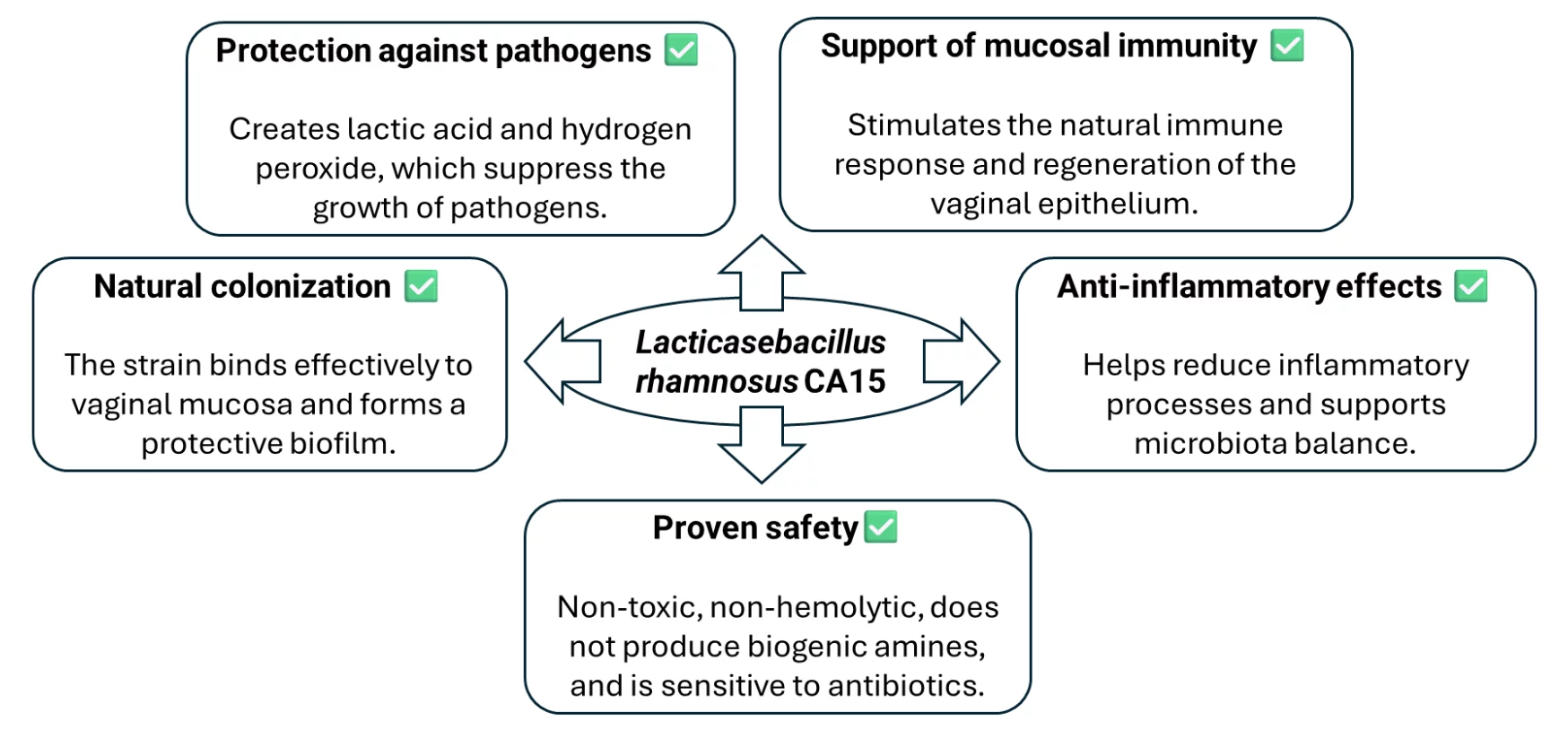
One strain that has been scientifically studied is Lacticaseibacillus rhamnosus CA15, studied for its abilities to naturally support the balance of the vaginal microbiota, lower pH and prevent the overgrowth of unwanted microorganisms (Rapisarda et al., 2023).
Why Lacticaseibacillus rhamnosus CA15?
Lacticaseibacillus rhamnosus CA15 (DSM 33960) is one of the most scientifically well-studied probiotic strains designed to support vaginal health. It is a naturally occurring strain isolated from the vaginal microbiota of healthy women that has been evaluated as safe and effective in promoting intimate environmental balance (Pino et al., 2022).
Research results indicate its multilevel effect - from its natural ability to colonize the mucosa to support local immunity. The key effects of this strain can be found clearly summarized in the following diagram (Pino et al., 2022).
These properties were the basis for the development of LADYbiom+®, a female probiotic designed to support the vaginal microbiome at different stages of a woman's life - from PMS to menopause. LADYbiom+® contains lactobacilli naturally occurring in the vaginal environment, in a carefully selected form and concentration.
The basic idea behind supporting women's health is the realization that balance is not a luxury, but an essential. The vaginal microbiome is not just a medical concept - it is a pillar of women's health. Its disruption affects not only physical comfort, but also self-esteem, intimacy, and reproductive health.
Taking care of the microbiome is not about extraordinary measures, but about daily, conscious choices - such as targeted supplementation with probiotics designed for women.
The vaginal microbiome through the eyes of age: what is changing and why?
The vaginal microbiome, the community of microorganisms that inhabit the vagina, naturally changes over a woman's lifetime. The most prominent factor in these changes is estrogen levels, which affect not only the composition of the microbiome, but also the state of the mucosa, the pH of the environment, and overall immunity (Ma et al., 2012; (Kwon & Lee, 2022).
This microbiome plays an important role in maintaining the balance of the vaginal environment - it is involved in protection against pathogens, acidic pH formation and regulation of local immunity (Kwon & Lee, 2022). Its stability and diversity change not only in relation to hormonal cycles, but also due to sexual activity, age, health status, or the use of antibiotics and hormonal contraceptives.
How does the composition of the vaginal microbiome change with age?
1. Neonatal period and childhood
Shortly after birth, the vagina is temporarily colonised by Lactobacillus species due to maternal hormones, but this disappears within a few weeks. In infancy, a higher vaginal pH (6.5-7.5) and more diverse bacterial communities prevail. Low estrogen levels mean an absence of glycogen, which is crucial for the growth of protective lactobacilli.
2. Reproductive age
During puberty, estrogen levels rise, leading to maturation of the vaginal mucosa and increased production of glycogen, a substance on which beneficial bacteria of the Lactobacillus genus feed. These beneficial bacteria produce substances that help maintain an acidic and protective environment in the vagina (pH around 3.5-4.5). Some of the most commonly found species include L. crispatus, L. gasseri and L. jensenii, which are associated with a balanced vaginal microbiota. At this stage of a woman's life, the microbiome is most stable, but can be affected by cyclical hormonal changes, sex life, antibiotics or contraception.
3. Perimenopause and menopause
The decline in estrogen during menopause causes thinning of the vaginal mucosa, loss of glycogen, and an increase in pH. These changes lead to a decrease in the number of beneficial bacteria of the genus Lactobacillus and a disruption of the balance of the microbiome. Bacteria such as Gardnerella vaginalis or Atopobium vaginae, which are associated with bacterial vaginosis, become more common. Changes in the vaginal environment may increase the risk of inflammation, dryness, pain with intercourse (dyspareunia) and recurrent urinary tract infections (Park et al., 2023; Kwon & Lee, 2022).
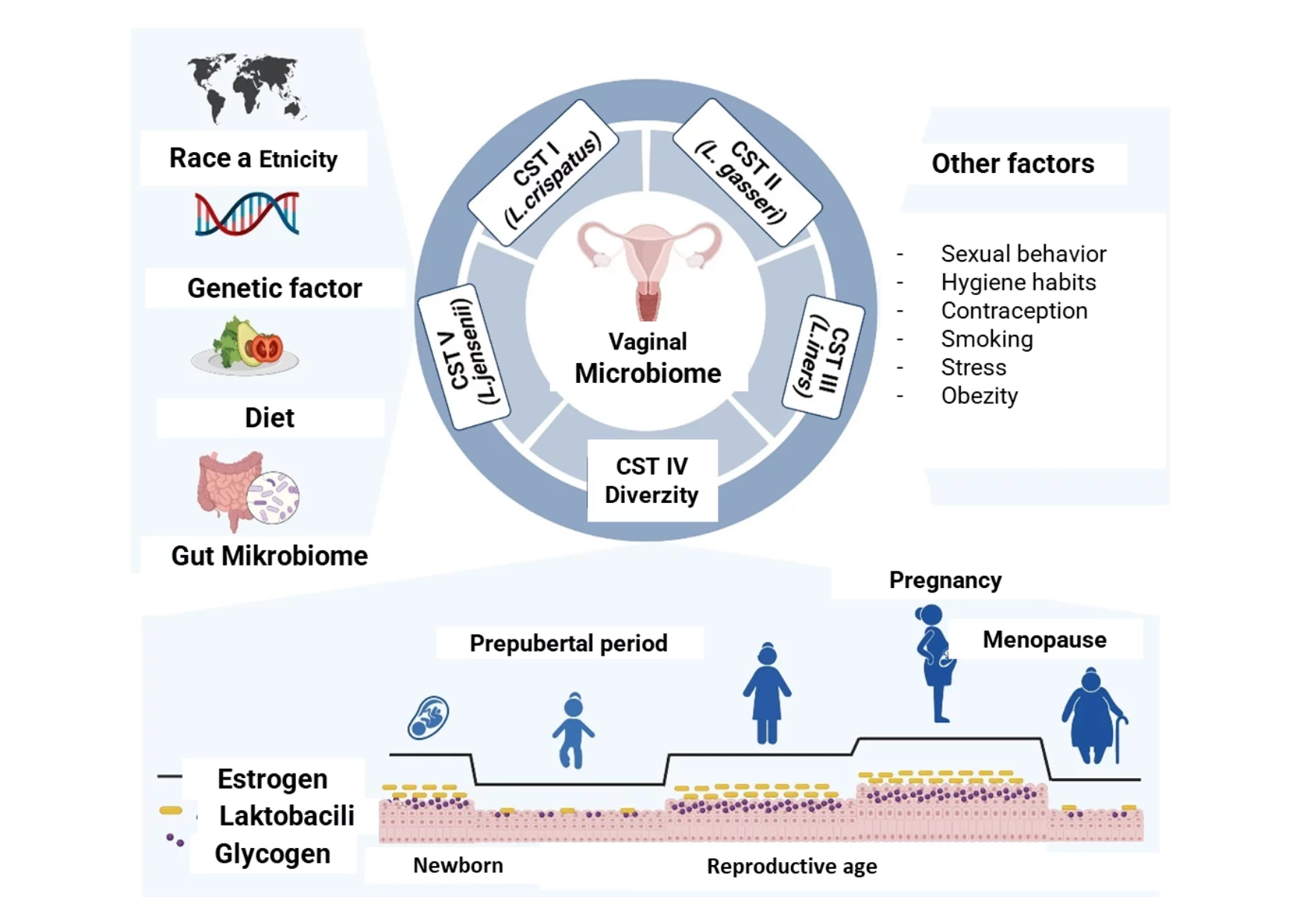
Fig. 2: Factors influencing the composition of the vaginal microbiota (Kwon & Lee, 2022).
The balance you deserve
Women's health starts with balance - and the vaginal microbiome is an integral part of it. Disrupting this delicate balance can have far-reaching consequences - from frequent infections to a decline in psychological well-being.
The good news is that there are now targeted solutions to help restore and maintain the microbiome. But it's important to pay regular attention to your intimate health - with knowledge, prevention and respect for your own body.
Checklist for maintaining the balance of the vaginal microbiome:
✅ Use only mild, unscented cleansers.
✅ I always choose high quality probiotics - with a focus on vaginal health.
✅ I avoid wearing synthetic underwear often and prefer breathable, cotton materials.
✅ I minimize stress, ensure quality sleep and support immunity.
✅ I see a gynaecologist regularly.
Want to strengthen your microbiome naturally?
If you're looking for an effective way to support your vaginal microbiome, improve hormonal balance and increase resistance to infection, reach for LADYbiom+® - a comprehensive nutritional supplement designed specifically for women's needs.

References
[1] PINO, A., et al. Lacticaseibacillus rhamnosus CA15 (DSM 33960) strain as a new driver in restoring the normal vaginal microbiota: A randomized, double-blind, placebo-controlled clinical trial. Frontiers in Surgery, 2023, vol. 9, article 1075612. DOI: 10.3389/fsurg.2022.1075612.
[2] RAVEL, J., et al. The vaginal microbiome of reproductive-age women. Proceedings of the National Academy of Sciences of the United States of America, 2011, vol. 108, Suppl. 1, pp. 4680-4687. DOI: 10.1073/pnas.1002611107.
[3] KWON, M. S., LEE, H. K. Host and microbiome interplay shapes the vaginal microenvironment. Frontiers in Immunology, 2022, vol. 13, article 919728. DOI: 10.3389/fimmu.2022.919728.
[4] AMABEBE, E., ANUMBA, D. O. C. The Vaginal Microenvironment: the Physiologic Role of Lactobacilli. Frontiers in Medicine, 2018, vol. 5, article 181. DOI: 10.3389/fmed.2018.00181.
[5] SONG, S. D., et al. Daily Vaginal Microbiota Fluctuations Associated With Natural Hormonal Cycle, Pregnancy and Contraception. Frontiers in Cellular and Infection Microbiology, 2020, vol. 10, article 543. DOI: 10.3389/fcimb.2020.00543.
[6] AGHA-HOSSEINI, M., et al. Crocus sativus L. (saffron) in the treatment of premenstrual syndrome: A double-blind, randomized and placebo-controlled trial. BJOG: An International Journal of Obstetrics & Gynaecology, 2008, vol. 115, no. 4, pp. 515-519. DOI: 10.1111/j.1471-0528.2007.01652.x.
[7] HAUSENBLAS, H. A., et al. Saffron (Crocus sativus L.) and major depressive disorder: A meta-analysis of randomized clinical trials. Journal of Integrative Medicine, 2013, vol. 11, no. 6, pp. 377-383. DOI: 10.3736/jintegrmed2013066.
[8] VERSTRAELEN, H., SWIDSINSKI, A. The biofilm in bacterial vaginosis: implications for epidemiology, diagnosis and treatment. Current Opinion in Infectious Diseases, 2019, vol. 32, no. 1, pp. 39-45. DOI: 10.1097/QCO.0000000000000517.
[9] ONDERDONK, A. B., et al. The human microbiome during bacterial vaginosis. Clinical Microbiology Reviews, 2016, vol. 29, no. 2, pp. 223-238. DOI: 10.1128/CMR.00075-15.
[10] MacPHEE, R. A., et al. Probiotic strategies for the treatment and prevention of bacterial vaginosis. Expert Opinion on Pharmacotherapy, 2010, vol. 11, no. 18, pp. 2985-2995. ISSN 1465-6566.
[11] RAPISARDA, A. M. C., et al. Lacticaseibacillus rhamnosus CA15 (DSM 33960) strain as a new driver in restoring the normal vaginal microbiota: A randomized, double-blind, placebo-controlled clinical trial. Frontiers in Surgery, 2023, vol. iSSN 2296-875X.
[12] SAXELIN, M., et al. Probiotic and other functional microbes: from markets to mechanisms. Current Opinion in Biotechnology, 2005, vol. 16, no. 2, pp. 204-211. ISSN 0958-1669.
[13] PETROVA, M. I., et al. Lactobacillus species as biomarkers and agents that can promote various aspects of vaginal health. Frontiers in Physiology, 2015, vol. 6, article 81.
[14] MA, B., et al. The vaginal microbiome: rethinking health and disease. Annual Review of Microbiology, 2012, vol. 66, pp. 371-389.
[15] PARK, M. G., et al. Menopausal changes in the microbiome - A review focused on the genitourinary microbiome. Diagnostics (Basel), 2023, vol. 13, no. 6, article 1193. DOI: 10.3390/diagnostics13061193.
[16] QABAHA, K., et al. Oleuropein is responsible for the major anti-inflammatory effects of olive leaf extract. Journal of Medicinal Food, 2017, vol. 00, no. 0, pp. 1-4. DOI: 10.1089/jmf.2017.0070.
[17] OMAR, S. H. Oleuropein in olive and its pharmacological effects. Scientia Pharmaceutica, 2010, vol. 78, no. 2, pp. 133-154. DOI: 10.3797/scipharm.0912-18. PMID: 21179340; PMCID: PMC3002804.
[18] FONG AMARIS, W. M., et al. Microbiota changes: the unseen players in cervical cancer progression. frontiers in microbiology, 2024, vol. 15, 8 Feb. DOI: 10.3389/fmicb.2024.1352778.
[19] PINO, A., et al. Lacticaseibacillus rhamnosus CA15 (DSM 33960) as a candidate probiotic strain for human health. Nutrients, 2022, vol. 14, no. 22, article 4902. DOI: 10.3390/nu14224902