Omega-3 Fatty Acids from Algae: The Original Source for Heart, Brain, and Vision
Omega-3 fatty acids are among the most important nutrients for the heart, brain, and vision, yet most of the population suffers from a chronic deficiency. They are traditionally associated with fish oil, but few realize that fish are merely “carriers” – the true original source is marine microalgae.

Omega-3 fatty acids are among the most thoroughly researched nutrients in nutrition science. Yet most of us suffer from a critical deficiency. Modern lifestyle has created an imbalance in our bodies that our ancestors never experienced (1, 2, 3).
- Dietary imbalance: Our diet is saturated with vegetable oils and processed foods rich in omega-6. While the ideal ratio in the body should be around 2:1, the average person today functions at a ratio of 15:1 to 20:1. This imbalance creates an environment in the body prone to hidden inflammation (1).
- Global deficiency: Expert analyses suggest that up to 90% of the population does not meet the recommended daily intake. We consume fewer fresh fish and natural fats, leading to fatigue, weakened immunity, and difficulty concentrating (2).
- Scientific evidence: Scientific research has advanced, and current studies indicate a link between omega-3 deficiency and the rise in depression, cardiovascular events, and autoimmune diseases that are major concerns of the 21st century (3).

Fig. 1. Global levels of the combined concentration of eicosapentaenoic acid and docosahexaenoic acid in the blood. *Data on fatty acid composition from total plasma lipids, plasma phospholipids, and whole blood were assigned to categorical ranges estimated to be equivalent to erythrocyte categories (adapted from Stark et al., 2016, 2).
What are omega-3 fatty acids and why are they essential?
Omega-3 fatty acids are essential fats, meaning that our body cannot produce them on its own and must obtain them from food or dietary supplements. Without them, our cells cannot properly communicate and regenerate (4).
From a biological perspective, the two most important forms are EPA (eicosapentaenoic acid) and DHA (docosahexaenoic acid) (4, 2).
EPA and DHA: Different roles, shared goal
Although they belong to the same family, they perform different functions in the body:
- EPA (the internal firefighter): Reduces inflammation, calms the immune system, and keeps blood vessels flexible, thereby protecting the heart.
- DHA (the structural engineer): Makes up to 20% of the fats in our cerebral cortex and retina. It is crucial for memory, learning, and vision.
- Developmental importance: DHA is critical during pregnancy for the development of the fetal nervous system, while EPA helps maintain mental stability in adults (5).

Fig. 2: Schematic illustration of the importance of EPA and DHA for our body
Fish as “intermediaries”: Where do omega-3s actually come from?
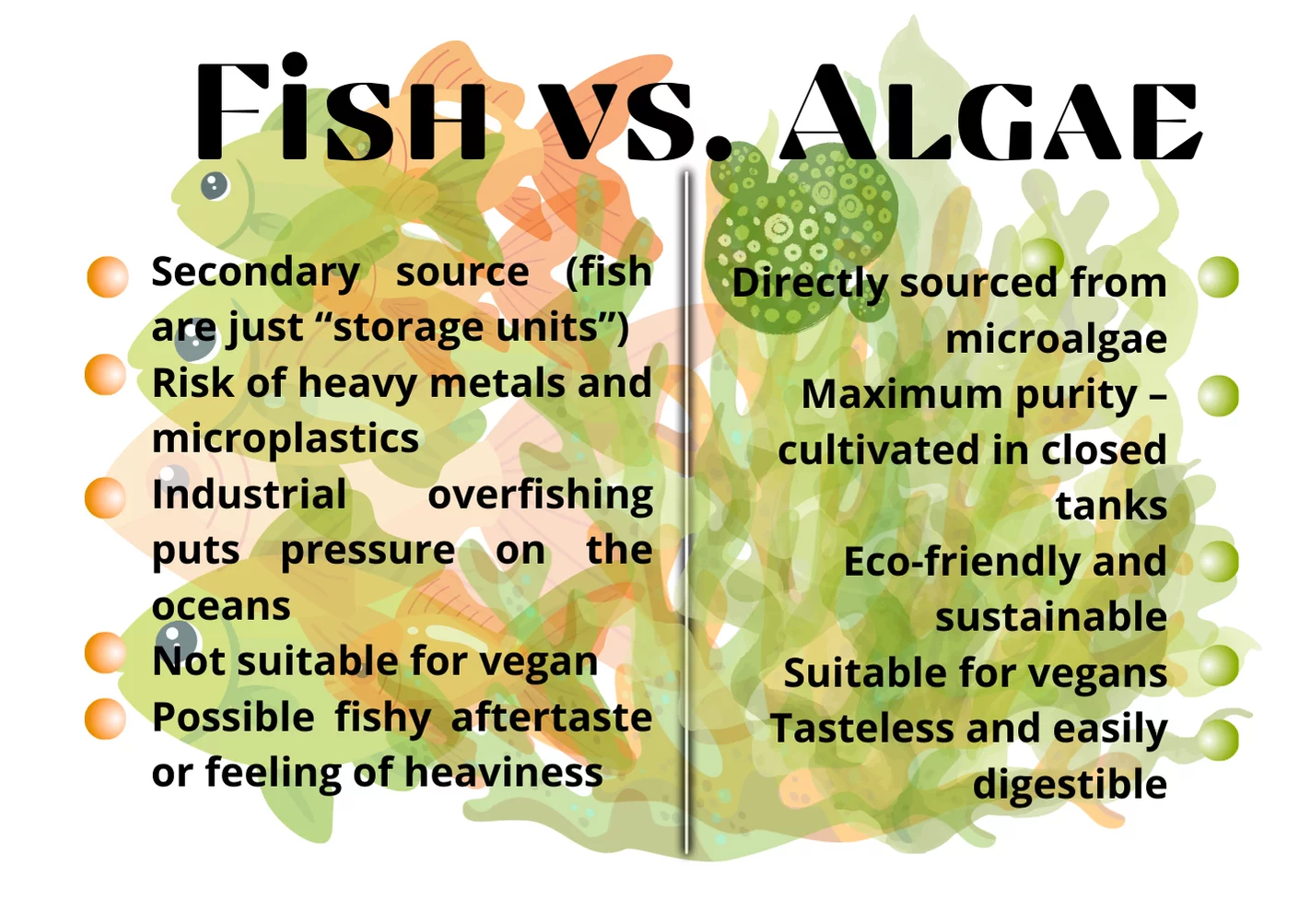
Most of us associate omega-3 fatty acids with fish oil. The truth, however, is that fish in this story are merely “storage units,” not producers. Like humans, fish cannot synthesize these valuable fats from scratch (6, 7).
Nevertheless, fish remain the most common source of these nutrients in our diet, although their consumption in the 21st century faces serious limitations. The main issue is not the omega-3 fatty acids themselves, but the environment in which fish live. Our oceans face massive pollution, causing fish oil to often accumulate undesirable substances such as heavy metals (mercury) and microplastics (8). In addition to contamination risks, many people are discouraged by fishy aftertaste during digestion and growing ethical and environmental concerns related to industrial fishing and the depletion of marine ecosystems (9).
This is precisely why scientific attention is turning to the very beginning of the chain – to marine microalgae, which are the true heroes and the original source of omega-3 fatty acids (8).
These tiny plant organisms are the ocean’s natural factories of EPA and DHA. The entire process works like a fascinating relay:
- Production: Microalgae synthesize omega-3 using solar energy.
- Accumulation: Small plankton consume the algae, and larger fish subsequently eat this plankton.
- Concentration: The higher a fish is in the food chain, the more omega-3 accumulates in its tissues over its lifetime.
For modern consumers, this information is especially important from the perspective of sustainability and purity. Today, we can obtain omega-3 directly from microalgae cultivated in controlled tanks. This represents a clean, vegan alternative that does not burden the oceans and avoids the risk of heavy metal contamination found in fish (6).
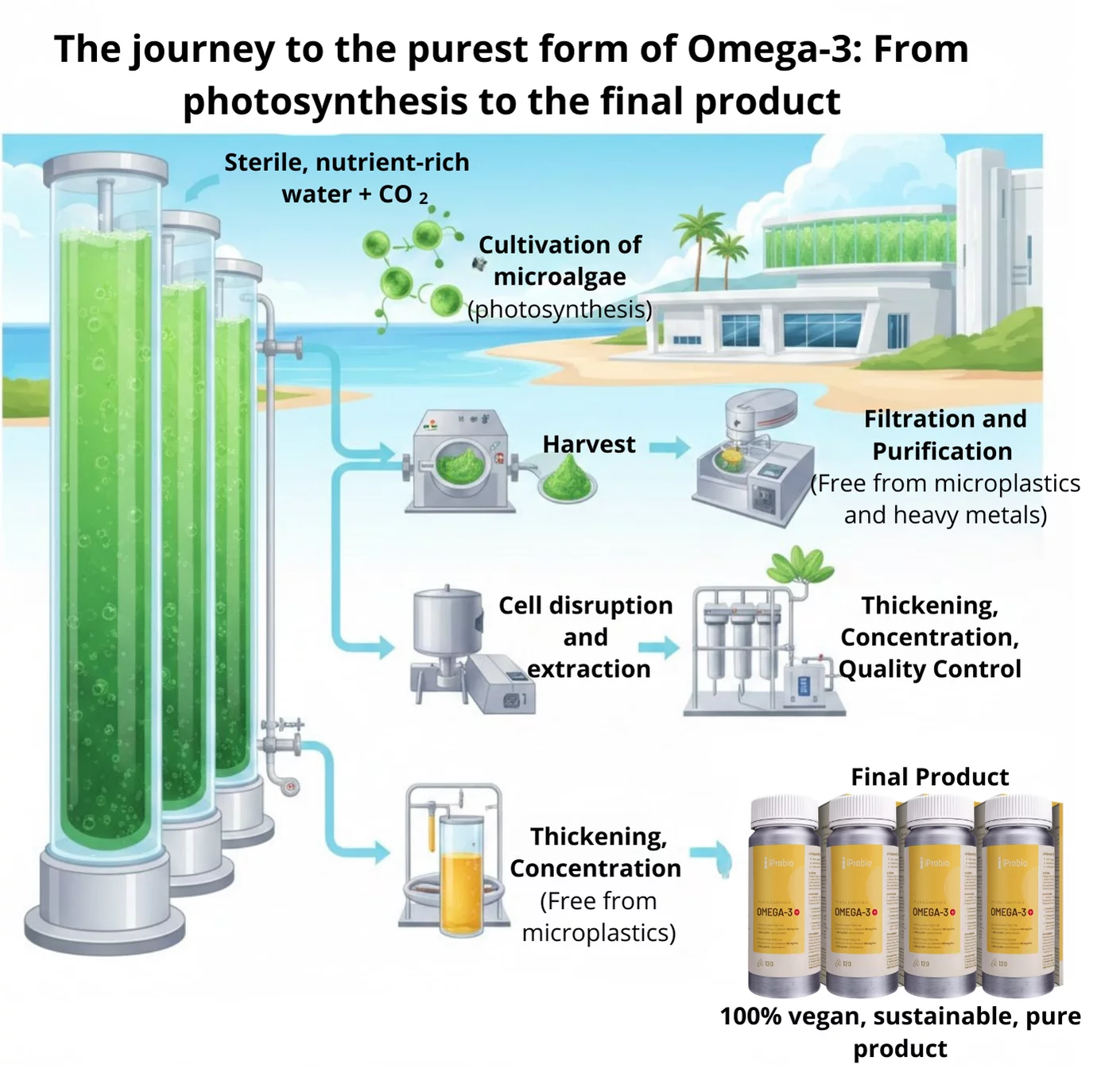
Fig. 3: Modern science now allows us to “bypass” fish and obtain omega-3 fatty acids directly from their original source – marine microalgae. The entire process takes place under strictly controlled conditions that guarantee a level of purity no longer found in today’s oceans.
- Cultivation in closed bioreactors: Microalgae are grown in special glass tubes (photobioreactors) or closed tanks on land. This system uses only purified water, nutrients, light, and CO2 to initiate natural photosynthesis. Thanks to the closed environment, the algae are protected from ocean pollutants such as heavy metals, PCBs, and microplastics.
- Harvesting and extraction: Once the algae reach an optimal concentration of valuable fats, they are filtered and centrifuged. The resulting biomass is then mechanically processed (by disrupting the cell walls), releasing crude algal oil rich in EPA and DHA.
- Purification and stabilization: The oil undergoes gentle filtration at low temperatures to preserve its natural triglyceride form. Natural antioxidants (e.g., vitamin E) are added to protect against oxidation, ensuring a low TOTOX index and product freshness.
- Final product OMEGA-3+®: The result is a highly concentrated, bioidentical oil that is 100% vegan and sustainable (created based on sources from references 6, 7, 9).
Are omega-3s from algae as effective as those from fish?
The short and clear answer is: Yes. Scientific studies confirm that EPA and DHA from algae are bioidentical to those from fish. This means that for your cells, it is exactly the same molecule your body recognizes and needs (10). However, omega-3 fatty acids obtained from algae have two important advantages that further enhance their effectiveness:
- Natural form (Triglycerides): Unlike inexpensive ethyl esters, triglycerides from algae are better absorbed and more natural for human digestion (11).
- Exceptional freshness: Effectiveness depends on the TOTOX index (a measure of total oxidation). Low oxidation means the oil does not develop an unpleasant odor and is safe for the body (12).
Who are algae-based omega-3s ideal for?
This modern approach to health is suitable for everyone, but certain groups benefit the most:
- Vegans and vegetarians: The only direct and complete source of EPA/DHA without animal products (13).
- Pregnant and breastfeeding women: Due to maximum purity without mercury risk, which is crucial for fetal brain development (5).
- Children: Who often refuse the taste of fish but need DHA for proper cognitive development (4).
- People with sensitive digestion: Since algal oil is a natural fat (triglyceride), it does not cause unpleasant fishy aftertaste or heaviness in the stomach (11).
- Those who do not regularly consume fish: An effective and clean way to supplement what is lacking in the modern diet (2).
How to choose the right supplement?
When choosing, do not look only for the label “Omega-3.” Based on expert recommendations, focus on these 4 key points (14):
- Specific EPA and DHA content: Do not be misled by the label “1000 mg of oil.” Look for the exact amount of EPA and DHA in milligrams on the label. A quality product should contain at least 250–500 mg of these fatty acids per serving, in line with preventive health recommendations (14).
- Product form: Liquid oil allows for easier dosing, while capsules are convenient for travel. In both cases, look for mention of the triglyceride form (11).
- Protection against oxidation: Omega-3s are prone to oxidation. A quality manufacturer adds antioxidants such as vitamin E (tocopherols) or rosemary extract to keep the oil fresh (12).
- Certification and origin: Verify that the algae are cultivated in closed systems on land, which guarantees purity from environmental toxins (6).
If you are looking for a product that makes no compromises between science and purity, OMEGA-3+® by iProbio meets all the premium quality attributes discussed above:
✅ Original source: No fish, but directly from marine microalgae – the cleanest link in the chain, free from mercury and microplastics.
✅ Maximum absorption: Preserved natural triglyceride form, which your body utilizes 30–50% better than common low-cost supplements.
✅ Guaranteed freshness: Thanks to a strictly monitored TOTOX index, you can be confident the oil is fresh, effective, and free from unpleasant aftertaste.
✅ Bioidentical EPA and DHA: Exactly the same molecules your heart, brain, and vision need – in 100% vegan quality.
Don’t settle for substitutes—choose the original source. OMEGA-3+® is the smart choice for anyone who wants the very best for their health.
List of References
- Simopoulos, A. P. (2021). An Increase in the Omega-6/Omega-3 Fatty Acid Ratio Increases the Risk for Obesity. Nutrients, 13(9), 3121. https://pubmed.ncbi.nlm.nih.gov/26950145/
- Stark, K. D., et al. (2016). Global survey of the omega-3 fatty acids, docosahexaenoic acid and eicosapentaenoic acid in the bloodstream of healthy adults. Progress in Lipid Research, 63, 132–152. https://pubmed.ncbi.nlm.nih.gov/27216485/
- Bourre, J. M. (2010). Dietary omega-3 fatty acids and psychiatry: mood, behaviour, and neurotransmission. OCL – Oilseeds and Fats, Crops and Lipids, 17(5), 267–275. https://pubmed.ncbi.nlm.nih.gov/15750663/
- Calder, P. C. (2018). Very long-chain n-3 fatty acids and human health: status, mechanisms and outcomes. Psychoneuroendocrinology, 94, 28–40. https://pubmed.ncbi.nlm.nih.gov/29039280/
- Swanson, D., et al. (2012). Omega-3 Fatty Acids EPA and DHA: Health Benefits Throughout Life. Advances in Nutrition, 3(1), 1–7. https://pubmed.ncbi.nlm.nih.gov/22332096/
- Koyande, A. K., et al. (2019). Microalgae: A potential alternative to health supplementation for humans. Food Science and Human Wellness, 8(1), 16–24. https://www.sciencedirect.com/science/article/pii/S2213453018301435
- Lenihan-Geels, G., et al. (2013). Alternative Sources of Omega-3 Fats: Can We Do Without Fish? Nutrients, 5(4), 1301–1315. https://pubmed.ncbi.nlm.nih.gov/23598439/
- Tocher, D. R., et al. (2019). Omega-3 long-chain polyunsaturated fatty acids, EPA and DHA: Bridging the gap between supply and demand. Nutrients, 11(1), 89. https://pubmed.ncbi.nlm.nih.gov/30621155/
- Adarme-Vega, T. C., et al. (2012). Microalgal biofactories: a promising source of omega-3 fatty acids. Microbial Cell Factories, 11(1), 96. https://pubmed.ncbi.nlm.nih.gov/22830315/
- Arterburn, L. M., et al. (2008). Algal-oil capsules and cooked salmon: nutritionally equivalent sources of docosahexaenoic acid. Journal of the American Dietetic Association, 108(7), 1204–1209. https://pubmed.ncbi.nlm.nih.gov/18589030/
- Neubronner, J., et al. (2011). Enhanced increase of omega-3 index in response to long-term n-3 fatty acid supplementation from triacylglycerides versus ethyl esters. Prostaglandins, Leukotrienes and Essential Fatty Acids, 84(1–2), 59–64. https://pubmed.ncbi.nlm.nih.gov/21063431/
- GOED (2022). The GOED Voluntary Monograph. Global Organization for EPA and DHA Omega-3s. Available online: https://goedomega3.com/technical-information/omega-3-epadha-oils-distinct-purity-criteria
- Lane, K., et al. (2014). Bioavailability and potential uses of vegetarian sources of omega-3 fatty acids: a review of the literature. Critical Reviews in Food Science and Nutrition, 54(5), 572–579. https://pubmed.ncbi.nlm.nih.gov/24261532/
- Bannenberg, G., et al. (2020). Ingredient transparency and labeling quality of omega-3 supplements. Journal of Functional Foods, 69, 103956.
Frequently Asked Questions (FAQ)
-
Yes. They contain the same active molecules, EPA and DHA. In fact, algae oil is often more concentrated and purer, as it is produced in a controlled environment without exposure to ocean toxins.
-
Unfortunately, usually not. Plant sources provide ALA, which the human body can convert into the important EPA and DHA only in very small amounts (often less than 5%). A direct source (algae or fish) is therefore essential for brain and heart health.
-
The difference lies in quality and processing. Cheap fish oils are often by-products of fishing, chemically modified (ethyl esters), and may contain impurities. Algae oil is a premium, pure source in its natural form (triglycerides), whose cultivation and processing are more demanding but much more beneficial for the body.
-
No. Since algae oil does not come from fish and is in triglyceride form, it is easily digested and does not cause the typical 'fishy burps' or unpleasant aftertaste common with oxidized (spoiled) fish oils.
-
This means that the EPA and DHA molecules from algae are chemically identical to those found in a salmon or the human brain. The body can use them immediately and naturally, without the need for complex conversion.
