Microbiome School: Inflammation in the Body and the Microbiome
In addition to acute inflammation, there is also chronic inflammation, which poses a risk to our health. Do you know the connection between inflammation and the microbiome?
In addition to acute inflammation, we also know about chronic inflammation, which threatens our health. Do you know what is the relationship between inflammation and the microbiome?
Why does inflammation occur in the body and how is it related to the gut microbiome?
The word inflammation can evoke something acute and hot. Like fire, inflammation is a good servant but a bad master. Inflammation is the body's efficient way of trying to clearly demarcate the territory in which it encircles its enemy. But often it's not that simple, and to win against infection, our immunity needs our help too. Do you know how our microbiome enters into this mechanism that protects our life?
Inflammation is a weapon against infection
Inflammation is the biological response of the immune system to an attack, which makes our body defend itself when it comes into contact with a foreign body, irritation or against a pathogen. By pathogens we mean bacteria, viruses and other organisms that cause infections.
The immune response is a genetically regulated, highly complex process of cooperation between non-specific (innate) and specific (acquired) immunity. The inflammatory response results in either the antigen (i.e. disease) winning or the immune system winning and the antigen being cleared from the body by other immune processes.
Acute inflammation
Acute inflammation sets in very quickly in just a few hours or days. In some cases, it can very quickly become a serious complication. Whether this happens depends on many factors, such as the infectious agent and the part of the body it affects.
Externally, acute inflammation can manifest itself in redness, swelling and pain. This is caused by swelling around the damaged tissue, which presses on delicate nerve endings but also by biochemical processes that affect nerve behaviour.
Increased temperature to fever, fatigue, headache, joint pain and general weakness may also be present .
Chronic inflammation
Chronic inflammation refers to a condition in which there is no invader in the body to fight against, but the body nevertheless continually produces inflammatory substances that travel throughout the body and damage tissues.
Its presence can cause:
- infection, with which the immunity is unable to cope for a long time, and acute inflammation becomes chronic,
- multiple injuries in which pro-inflammatory substances are constantly secreted,
- hypersensitivity in which the immunity does not respond adequately to the trigger, for example in allergies,
- autoimmune diseases in which the body identifies its own cells as the enemy and continuously attacks them.
How does chronic inflammation manifest itself?
Common symptoms of chronic inflammation include, for example:
- fatigue,
- body pain,
- psychological problems, depression or anxiety,
- diarrhoea or constipation,
- weight gain or weight loss,
- recurrent infections.
I want to improve my microbiome
Unfortunately, these symptoms are often mild and don't affect our lives enough to immediately look for the cause. Moreover, they are non-specific and thus we don't know what is causing the inflammation and where to look for it.
Chronic inflammation subtly destroys our health
Inflammation can arise virtually anywhere in our body and although this cannot be said of absolutely all inflammation, we are mostly able to catch and treat the complications of acute inflammation; chronic inflammation often goes unnoticed for long periods.
Chronic inflammation is thus very closely related to chronic diseases. The fact that healthy cells and tissues are damaged over a long period of time can, according to experts, result in diseases such as:
- cancer,
- heart and blood vessel disease,
- rheumatoid arthritis,
- type 2 diabetes mellitus (diabetes),
- obesity,
- asthma,
- cognitive decline,
- dementia and others.
There are factors that may increase the risk of chronic inflammation. These are mainly older age, unhealthy lifestyle, obesity, stress, hormones or lack of sleep.
Inflammation and the gut microbiome
Discovering and treating chronic inflammation (which can be anywhere and its symptoms are non-specific) is challenging. This forces experts to look for connections that might lead them to it.
Recent studies have found links between chronic inflammation and the gut microbiome.
The gut microbiome is increasingly being referred to as our second brain. There are over 100 trillion microbial cells in the human gut that play a vital role in regulating human metabolism through symbiosis with the host - us.
The gut microbiome can regulate inflammatory processes. How?
The gut microbiota plays a significant role in the production of chronic inflammation especially when it is in imbalance called dysbiosis. In dysbiosis, the intestinal wall is disrupted, allowing pro-inflammatory substances (LPS) to enter the bloodstream through the leaky gut and induce long-term, chronic, low-grade inflammation.
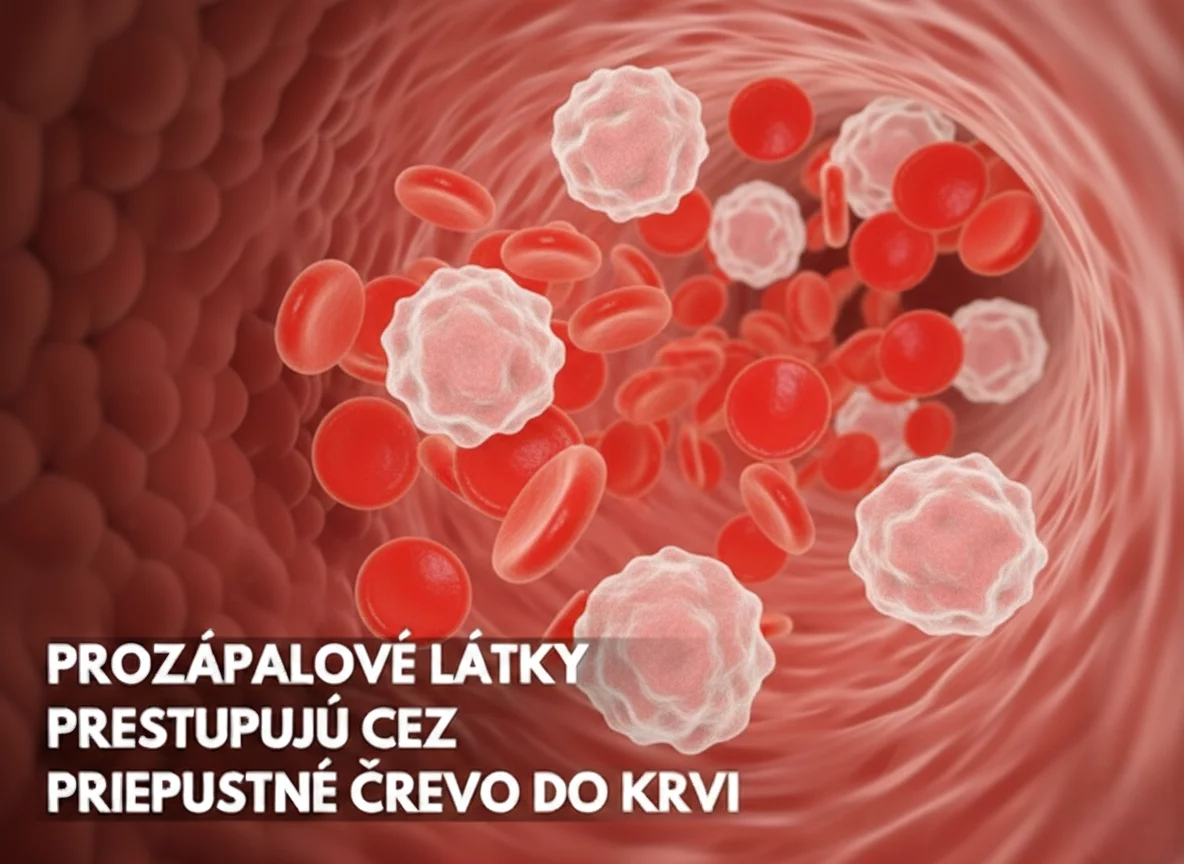
Also, when the microbiota is imbalanced, the production of beneficial molecules that are anti-inflammatory is disturbed, and conversely, pro-inflammatory molecules are formed that damage the gut but also other organs. It is the production of butyrate that is extremely important for suppressing inflammation, but the bacteria that produce it cannot be produced as a supplement. Fortunately, there are clinically proven targeted prebiotics available on our market called Microbiome+.
Research in this area suggests a role for macrophages (cells of the immune system), which have both pro-inflammatory and anti-inflammatory properties and are associated with many chronic diseases. According to research, they are also involved in the interaction between the gut microbiota and diseases such as InflammatoryBowel Disease (IBD), obesity and other chronic diseases.
Thus, the gut microbiota causes or suppresses inflammation at several levels and plays a particularly important role in chronic diseases. By eliminating the bearings of constant inflammation, a person can get rid of one of the sources of their problems.
Research suggests that people consuming the "modern Western diet", rich in fats, sugars and poor in fibre, are completely losing some microbial species that are extremely important for health. In the same way, in the West, we are seeing a high increase in chronic diseases that are linked to the microbiome.
The solution may lie in so-called flavobiotics. It is a relatively new term to refer to a special group of flavonoids that travel intact to the colon where they are subsequently responsible for increasing the production of postbiotic compounds beneficial to health (SCFAs - short chain fatty acids, lipopolysaccharides, amino acids, antimicrobial peptides, neutrotransmitters, etc.).
But what are flavonoids in general and why are they so important for our health?
Flavonoids belong to the class of plant secondary metabolites and are so-called phenolic compounds. Phenolic compounds are the group with the most clinical evidence for their therapeutic potential in the field of health in relation to reducing the risk of chronic and/or degenerative diseases.
Flavonoids occur naturally in fruits, vegetables and certain beverages (tea, red wine). They play several important roles in plants, depending on the type of flavonoid and also the type of plant in which they occur. In general, however, plants use them for their growth and defence against plant viruses. Also, some flavonoids are also known as plant pigments [1].
In addition to their importance in plants, they have an indispensable role in the human body where they act through multiple mechanisms that ultimately result in antioxidant, anti-inflammatory, antidiabetic, anticancer, antiobesity, and cardioprotective effects(Fig.1). In addition to flavonoids themselves, flavonoid metabolites are also beneficial, acting in multiple signaling cascades on different cell types [2].
Fig.1: Health benefits of flavonoids. Adapted from [2].
As these are plant metabolites, our body cannot synthesize them and only receives them from plant food. For a constant and guaranteed intake of beneficial flavonoids, Microbiome+ is therefore suitable. It is a citrus complex made in Europe from the fruits of Citrus Sinensis and Citrus Paradisi, which is rich in two active flavonoids: hesperidin and naringin.
Flavobiotics show a strong prebiotic effect without subsequent fermentation in the intestine as is the undesirable effect of other prebiotics.
The benefits of flavobiotics were also tested in a double-blind, placebo-controlled 12-week clinical trial, which demonstrated a dual-acting ingredient effect [3]:
- Flavobiotics alleviate intestinal inflammation, strengthen the intestinal barrier, and change the composition of the gut microbiome to a more beneficial one by increasing levels of Clostridium Cluster XIVa. and Roseburia spp.
These strains are known for their ability to produce butyrate. Butyrate, which belongs to the SCFAs (short chain fatty acids), is an anti-inflammatory compound and a major source of energy for colonocytes (cells of the intestinal wall). Specifically, butyrate contributes health-promoting properties by inhibiting NK-KB, a protein that is often seen in inflammatory bowel diseases (IBD - Crohn's disease and ulcerative colitis). In addition, cellular pathways are activated that ultimately contribute to improved intestinal barrier function. - Flavobiotics are metabolized by the gut microbiota and the active metabolites are released in the lumen (inner space) of the gut. This results in a direct effect that further reduces inflammation, oxidative stress and supports the proper functioning of the immune system.
In conclusion, the positive change in the gut microbiome induced by taking Microbiome+ causes an increase in the production of SCFAs, especially butyrate and propionate. Butyrate and propionate are essential compounds for the maintenance of a healthy intestinal barrier and for the proper regulation of the immune system. Moreover, active metabolites that are produced by the metabolism of flavobiotics by the gut microbiome have anti-inflammatory and anti-oxidant effects on the intestinal mucosa. Flavobiotics are useful for the prevention as well as the alleviation of symptoms of various intestinal inflammatory syndromes (IBS, IBD) [3].
These connections are already hopeful that proper care of the gut microbiome and their subsequent impact on chronic inflammation, which we are unable to detect and treat, can significantly protect our bodies from the onset of serious diseases. Read more about probiotics and prebiotics at <a href="http://www.iprobio.sk
Resources:
[1] ; A. D. Diwan, and S. R. Chandra, "Flavonoids: an overview," J. Nutr. Sci., vol. 5, 2016, doi: 10.1017/jns.2016.41.
[2] C. R. Ballard and M. R. Maróstica, Health Benefits of Flavonoids. Elsevier Inc, 2018.
[3] Internet resource: https://www.iprobio.sk/files/docs/studia-flavobiotikum-62ca682737769.pdf