Verified by Heureka.sk customers 98 % recommend
on FB
iMunobiom+®
35+ clinical and preclinical studies. 50+ scientific publications.
Targeted probiotic

Immunity does not start in the nose. It starts in the gut.

The immune system is complex – which is why iMunobiom+® does not put everything on a single ingredient. It combines a specific bacterial strain, Lacticaseibacillus rhamnosus CRL 1505, yeast beta-glucans and vitamin D3 – three distinct ingredients, each with a role in the formulation. Strain CRL 1505 and yeast beta-glucans bring two distinct, research-studied pathways of interaction with the immune system, while vitamin D contributes to its normal function*. One considered formulation for everyday use by children and adults.

CRL 1505 · one of the most extensively studied bacterial strains
Yeast beta-glucan · a form with clinical research
Vitamin D3 from lichen · vegan source

* Vitamin D contributes to the normal function of the immune system. EU-authorised health claim for vitamin D.

Now on sale

Limited edition
You save 288,36€
Family pack for 4 In the pack: 12× iMunobiom+® + 8× Mikrobióm+® gift Each of the four family members gets a full 3-month course and 2 gifts.
449€
737,36€
112,25€ / person
Left 15 of 50
Wave 2 · 100 packs
You save 194,02€
Pack for 3 In the pack: 9× iMunobiom+® + 6× Mikrobióm+® gift Each of the three family members gets a full 3-month course and 2 gifts.
359€
553,02€
119,67€ / person
Left 100 of 100

Standard packs

1 month
44,06€
1,47€ / day
You save 42,27€
3 months + 1× Mikrobióm+® gift 16,19€ cheaper than 3 monthly packs, plus a gift worth 26,08€.
115,99€
158,26€
1,29€ / day
Best value
You save 118,71€
6 months + 3× Mikrobióm+® gift 40,47€ cheaper than 6 monthly packs, plus gifts worth 78,24€.
223,89€
342,60€
1,24€ / day
Ships within 24 hours
30-day guarantee
Secure payment
35+ clinical studies of one strain
35+ studies and 50+ scientific publications dedicated to a specific strain.
15,000+ satisfied customers
In supplements, 20 to 30 % of customers come back. With us, 42 %.
Vegan vitamin D3
Lichen is a rare plant source of D3 in the same form the body makes in sunlight - suitable for the whole family.
They wrote about us

The same round of colds every winter?

Immunity is not just about vitamin C in December. The gut and the immune system are closely linked – and looking after them makes sense all year round.

Problem #1

We only deal with immunity when we need it

One cold passes and a few weeks later we are dealing with another. Vitamin C, tea and other “seasonal” fixes come out only with the first symptoms – and the next round we start over.

Problem #2

We expect a supplement to be a quick rescue

A food supplement is often seen as a quick fix. The immune system is complex and closely linked to the gut microbiome – so it is worth looking at its support in a broader context.

Solution

Not more. Targeted.

iMunobiom+® combines three ingredients with different roles in the formulation. Regularity matters too – it is designed for longer-term use, not just a few days in season.

Martin HarantaExplained by Martin Haranta · CEO and co-founder of iProbio

“Probiotics do something for immunity.” That claim says nothing.

The immune system is the second most complex system in the body after the nervous system, so the phrase “supports immunity” on its own says nothing. In a few minutes Martin Haranta explains what the strain in iMunobiom+® actually does and why its mechanism is also known.

  • One of the best-documented bacterial strainsLacticaseibacillus rhamnosus CRL 1505 has more than 35 preclinical and clinical studies behind it. Research also looks at how the strain acts – including a strain-specific peptidoglycan in the cell wall and its role in the observed immune response.
  • The gut–lung axisThe strain is taken by mouth and acts in the gut, yet the literature also describes a signal reaching the airways. That is known as the gut-lung axis.
  • Beta-glucans are also food for bacteria450 mg of beta-glucans from Saccharomyces cerevisiae. Beta-glucan is a polysaccharide, so besides its own role it also serves in the gut as food for beneficial bacteria.
  • Vitamin D3 from lichenLichen is one of the few plant sources of vitamin D3 in its natural form, cholecalciferol – the same form the body makes in sunlight. It is obtained by gentle UV irradiation of lichen, 800 IU in the daily dose, suitable for vegans too. Vitamin D contributes to the normal function of the immune system.
“If the science on a specific probiotic strain is done properly, I know exactly how it stimulates immunity and what I can expect from it.”
Martin Haranta · CEO and co-founder of iProbio

Why iMunobiom+®

It is not enough to know which bacterium is in the capsule. The specific strain matters too. That is what determines its particular properties.

CRL 1505 – studied effects and mechanism of action

With strain CRL 1505, research does not only look at what was observed, but also at how the strain acts. Specific structures of its cell wall and their role in the observed immune response are studied too.

Vitamin D3 from lichen

A vegan source of vitamin D3 in a deliberately chosen daily dose. Its place in the formulation has a clear reason – vitamin D contributes to the normal function of the immune system.

Beta-glucans from Saccharomyces cerevisiae yeast

Not every beta-glucan is the same. The yeast (1,3)-(1,6)-β-D form has its own clinical research, including studies focused on the immune response and upper respiratory infections.

One formulation for children and adults

CRL 1505 withstands stomach acid and bile and does not produce histamine or other biogenic amines. The formulation is intended for everyday use by children and adults.

We look at immunity in context

Immunity is not one isolated process. It is linked to what happens in the gut, how the immune system responds and to processes on the respiratory mucosa. Research looks at these connections too.

01

Immune response

Strain CRL 1505 has been studied in relation to the immune system’s reaction to various viruses and bacteria, including those linked to the airways and the gut.

02

Respiratory tract

A substantial part of CRL 1505 research focuses on the upper airways, especially in periods when respiratory infections are more common.

03

Immunity and the gut

The gut and the immune system are closely linked. Both CRL 1505 and beta-glucans are studied for interactions with the gut environment – CRL 1505 in relation to the immune response, beta-glucans in relation to gut bacteria.

04

Immunity and vitamin D

Vitamin D has a clearly defined role in the immune system – it contributes to its normal function. That is why it is one of the three core ingredients of iMunobiom+®.

A specific strain. A specific role.

2 capsules in the morning, on an empty stomach
strain CRL 1505 beta-glucans vitamin D3

Two capsules daily · 1 × 10⁹ CFU in the daily dose

A specific strain. A specific role.

iMunobiom+® combines a bacterial strain, yeast beta-glucans and vegan vitamin D3 in one daily dose. Simple composition and simple use make it easy to fit the routine to individual needs.

Adults and children from 3 years

2 capsules in the morning, on an empty stomach, with a glass of water. Children aged 3 to 12: 1 capsule daily.

Time away from food

About 15 to 20 minutes before the first meal

Regularity

Every day, including weekends and holidays

Course length

At least 3 months

Storage

Room temperature (up to 25 °C), a dry, dark place

iMunobiom+® is not suitable for children under 3, pregnant or breastfeeding women, or anyone hypersensitive to any of the ingredients. If you have health issues or take medication, consult a doctor.

This refers to composition and how to take it. These are not claims about an effect in the human body.

One strain. Two supporting ingredients.

No “universal” immune blend. Each ingredient has a reason and a basis.

1
Lacticaseibacillus rhamnosus CRL 1505
One of the most studied bacterial strains – 35+ preclinical and clinical studies and 50+ scientific publications. Resistant to stomach acid and bile.
1 × 10⁹ CFU
Beta-glucans (Saccharomyces cerevisiae)
A precisely defined (1,3)-(1,6)-β-D-glucan from yeast, studied in clinical trials in relation to immune response and respiratory infections.
450 mg
Vitamin D3 (vegan from lichen)
A plant source of vitamin D3 in a thoughtfully chosen daily dose. Vitamin D contributes to the normal function of the immune system and the process of cell division.
800 IU
Daily dose: 1 × 10⁹ CFU strain CRL 1505 + 450 mg beta-glucans + 800 IU vitamin D3 (cholecalciferol)

What the research says

The ingredients in iMunobiom+® have been studied in clinical trials. We present their design, dosage and what was measured. Study results relate to the individual ingredients studied and the forms and doses used, not to the finished iMunobiom+® product.

Strain Lacticaseibacillus rhamnosus CRL 1505

Randomised, double-blind, placebo-controlled study

RCT · n = 298 · deti 2–5 rokov · 6 mesiacov
Study design RCT, double-blind Source: Villena et al., 2012
Number of participants n = 298 Source: Villena et al., 2012
Daily dose in the study ≥ 1 × 10⁸ CFU Source: Villena et al., 2012
What was measured Incidence of intestinal infections, upper respiratory tract infections and tonsillitis, fever episodes, antibiotic use and mucosal IgA levels. Source: Villena et al., 2012

Villena et al., Int. J. Biotechnol. Wellness Ind. 2012; 1:189 to 198.

Strain Lacticaseibacillus rhamnosus CRL 1505

Randomised, double-blind, placebo-controlled study

RCT · n = 140 · 12 weeks Latest study · 2026
Study design RCT, double-blind Source: Taverniti et al., 2026
Number of participants n = 140 Source: Taverniti et al., 2026
Daily dose in the study 1 × 10⁹ CFU Source: Taverniti et al., 2026
What was measured Incidence of upper respiratory tract infections (URTI), their number and duration, use of symptom medication and salivary IgA levels. Source: Taverniti et al., 2026

Taverniti et al., Microorganisms 2026; 14:1270.

(1,3)-(1,6)-β-glucan from Saccharomyces cerevisiae

Randomised, double-blind, placebo-controlled multicentre study

RCT · n = 162 · 16 weeks
Study design RCT, multicentre Source: Auinger et al., 2013
Number of participants n = 162 Source: Auinger et al., 2013
Daily dose in the study 900 mg Source: Auinger et al., 2013
What was measured Number of common cold episodes, infection symptom scores and sleep disturbance during colds. Source: Auinger et al., 2013

Auinger et al., Eur. J. Nutr. 2013; 52:1913 to 1918.

(1,3)-(1,6)-β-glucan from Saccharomyces cerevisiae

Randomised, double-blind, placebo-controlled study

RCT · n = 291 · 16 weeks
Study design RCT, double-blind Source: Dharsono et al., 2019
Number of participants n = 291 Source: Dharsono et al., 2019
Daily dose in the study 900 mg Source: Dharsono et al., 2019
What was measured Global severity, incidence and duration of upper respiratory tract infections, blood pressure and mental well-being. Source: Dharsono et al., 2019

Dharsono et al., J. Am. Coll. Nutr. 2019; 38(1):40 to 50.

Read more about the research and selected studies in our scientific PDF

What is in the pack

60 capsules · transparent composition

Bacterial strain

Lacticaseibacillus rhamnosus CRL 15051 × 10⁹ CFU
Resistance (acid/bile)
Does not produce histamine

Supporting ingredients

Beta-glucans (Saccharomyces cerevisiae)450 mg
Vitamin D3 (cholecalciferol)800 IU
D3 sourcelichen (vegan)
Dosage: Adults 2 capsules (children aged 3 to 12: 1 capsule) daily
Recommended course: At least 3 months
Strain does not produce histamine Vegan vitamin D3 GMO-free No artificial colours Resistant to stomach acid

How we compare

We compared iMunobiom+® with what people usually reach for during flu season.

iMunobiom+® Vitamin C / “fizzy tablets” Generic probiotics
Specifically identified bacterial strain CRL 1505 not always
Strain backed by its own research 35+ studies not always
Beta-glucans in the formulation usually not
Vitamin D3 in the formulation 800 IU usually not
Non-histamine-producing strain not always

Who stands behind iProbio

40 years of experience in microbiome research. Three people united by the aim of turning scientific knowledge into considered, functional products.

MVDr. Alojz Bomba, DrSc.
Co-founder and scientific director
"

Most of the data we have is on a few specific strains. CRL 1505 is one of them - that is why we build immune support on it, not on a random blend.

40 years of intestinal microbiome research 295 citations in scientific papers 31 international research projects 25 years as organiser of the International Probiotic Conference
Martin Haranta, MSc.
Co-founder and CEO
"

A specific strain for a specific problem. That is the whole difference between a targeted probiotic and a random mix of “good bacteria”.

MSc., The Open University, UK 8 international research and innovation projects 3 scientific publications Founder of the ARCOBIOME centre (UPJŠ Košice)
Ing. Norbert Bomba
Ing. Norbert Bomba
Co-founder & CBDO
"

A quality probiotic must be built on scientific evidence and real data from clinical practice - not on marketing promises.

20+ years in biotechnology Co-founder of PerBiotiX 25 years as organiser of the International Probiotic Conference Director of Cassovia Life Sciences

Where our science comes from

40+ years of research you can see in the composition

The scientific career of our co-founder MVDr. Alojz Bomba, DrSc. goes back to the 1980s. In 1990 he co-founded a gnotobiotic laboratory in Slovakia, the only facility of its kind, and in 2000 he founded an international scientific conference on probiotics and prebiotics.

  • Gnotobiotic laboratory since 1990: an environment where the effect of one strain can be separated from everything else.
  • The potentiated probiotics concept: selected strains combined with companion ingredients of natural origin.
  • The IPC conference since 2000, which Dr Bomba founded and chaired until 2015.
MVDr. Alojz Bomba, DrSc. at work in the laboratory
MVDr. Alojz Bomba, DrSc., co-founder and scientific guarantor of iProbio

Dr Alojz Bomba’s research line

40+ years from questions to formulations

Forty years as a connected chain of knowledge: from physiology and tightly controlled microbial models to the way iProbio thinks today about strains, omega-3 and plant bioactives.

scientific line since 1984 gnotobiology since 1990 in iProbio products since 2020
MVDr. Alojz Bomba, DrSc.
co-founder and scientific director

What research changed

Behind the result is a specific strain

The research line gradually shifted attention from a general “let's add beneficial bacteria” to more specific questions. Strain, dose, site of action and ability to survive the surrounding environment can all change the outcome.

01 · IdentityWhich exact strain do we use?
02 · DoseHow many viable bacteria are given?
03 · JourneyDo they survive and reach the site of interest?
04 · EnvironmentWhat can influence their behaviour?

Product consequence: we select ingredients based on their identity, mechanism, available level of evidence and role in the whole formulation.

Documented history

From first measurements to targeted microbiome modulation

Each stage added another piece of the puzzle. The timeline shows, at every step, what the study found and how it later shaped product thinking.

1983-1989

From animal physiology to microbial research

Dr Bomba's early scientific work focused on the physiology and metabolism of farm animals. From the late 1980s his research concentrated on microorganisms, their colonisation and ways to influence the intestinal environment.2

What it brought: a methodological foundation: measure the biological response and the conditions of the experiment.

1990-1999

Gnotobiology: studying gut bacteria without microbial noise

Gnotobiology is the field that studies the role of microorganisms under precisely controlled conditions. It uses animals without their own microbiota or with a precisely defined microbial composition, making it possible to reliably track the effects of specific bacteria without interference from other microorganisms.

From 1990 Dr Bomba and colleagues built a gnotobiology facility in Slovakia, a specialised research unit designed for this type of experiment. It made it possible to study the effects of selected microorganisms and their combinations under precisely controlled conditions.3

Publications from the 1990s tracked, for example, lactobacillus colonisation, their interactions with E. coli, organic acid production, metabolism and immune response.2

What it brought: the ability to ask what a specific microorganism does in a controlled system, and where its effect changes.

2000-2007

"Potentiated probiotics" and the omega-3 branch

In 2000 Dr Bomba founded the International Scientific Conference on Probiotics and Prebiotics (IPC). Two years later his team presented the concept of potentiated probiotics: combinations of selected bacteria with nutritional components that may support their action, such as fructooligosaccharides (FOS), maltodextrins or polyunsaturated fatty acids.4

In gnotobiotic piglets, omega-3 increased adhesion of L. paracasei in the jejunum (middle part of the small intestine); the difference appeared specifically in this part of the gut.5

What was found: a companion ingredient can influence bacterial behaviour, but the effect depends on site and model. This was experimental research in an animal model.

2007-2018

From one mechanism to the whole ecosystem

Research expanded into prebiotics (food components that serve as food for beneficial gut bacteria), natural bioactive compounds (substances from natural sources that may act on immunity, metabolism and other body functions), lipid metabolism (processing and use of fats in the body) and targeted microbiota modulation (deliberately influencing the composition and function of gut microorganisms using selected bacteria, prebiotics or other nutritional components). The team combined microbiology, molecular biology, biochemistry, immunology, cell models, preclinical studies and models of the digestive tract.6

In 2015 Alojz Bomba and Ladislav Strojný received a technology transfer award for an innovation with practical potential. It concerned a separate research branch of the same line.7

What it brought: the product began to be understood as a system: live strain, its environment, bioactive compounds and the way it is validated.

2019

Independent human study of five strains

In a randomised, double-blind, placebo-controlled study, 109 adults with coeliac disease who still had digestive problems resembling irritable bowel syndrome (IBS) despite a gluten-free diet were followed. The research evaluated five precisely defined probiotic strains, the same strains used in HIT today.8

Scope of the study: the study followed these strains at a dose of 40 billion CFU. We continue to validate today's complete HIT formulation with omega-3 and L-lysine. The study was conducted and published by an independent international team.

2020 to today

Translating the academic line into iProbio products

PerBiotiX was founded in May 2020 and entered the Slovak market with the iProbio brand in November 2020.910

In 2023 Dr Bomba and Martin Haranta described a framework for personalised and targeted microbiome modulation (deliberately influencing the composition and function of gut microorganisms according to an individual's needs): decisions based on specific strains (selecting microorganisms with precisely defined properties), individual context (taking health status and personal needs into account), metabolic data (information about processes and substances in the body) and level of clinical evidence (amount and quality of scientific confirmation of effect).11

What it means today: iProbio builds on scientific principles and translates them into formulations. Every formulation rests on principles validated in this line over decades.

How knowledge was gained

From controlled models to humans

Each method answers a different question. Mechanism in the lab, outcome in animals and outcome in humans: each level answers its own question.

What is a gnotobiotic model

“Gnotobiotic” means the animal's microbial colonisation is known. One type is a germ-free model kept in a sterile isolator; scientists can then deliberately colonise it with one strain or a precisely defined group of microorganisms.16

In Dr Bomba's piglet experiments this kept the microbial environment precisely known. Researchers could compare groups with selected <i>L. paracasei</i>, with or without a companion ingredient, and track adhesion or colonisation more precisely in different parts of the gut.

What the model shows: a simplified gut has its own anatomy and immune environment, which is why the mechanism is so clearly visible. It answers what the strain can do. Human studies answer how that appears in a specific person.

What the experiments summarised in 2002 showed

The publication combines results from several separate experiments. Because they used different models and conditions, each must be assessed separately.

MaltodextrinIn gnotobiotic piglets the combination reduced E. coli bacteria adhering to the jejunal mucosa (middle part of the small intestine) by 1 log (roughly a 10-fold reduction) compared with control.Jejunum · animal model
Polyunsaturated fatty acidsPUFA oil (polyunsaturated fatty acids, a type of fat including omega-3 and omega-6 fatty acids) increased adhesion of L. paracasei in the jejunum (middle part of the small intestine); the difference appeared specifically in this part of the gut.Jejunum · animal model
FructooligosaccharidesIn weaned piglets the combination was associated with changes in the numbers and representation of several bacterial groups in faeces, suggesting a possible influence on gut microbiota composition after weaning.Faecal samples · field model

The authors derived the principle of potentiated probiotics: different companion ingredients may affect different parts of the digestive tract. They treated combined action along the whole tract as a hypothesis for further research.4

Bomba A. et al., British Journal of Nutrition 88 (Suppl. 1), 2002. A set of experiments in animal models.

01

Gnotobiotic models

Precisely known or zero microbiota helps isolate the effect of a specific microorganism from thousands of other variables.

02

Culture and colonisation

Survival, quantity, adhesion and location of bacteria in different parts of the digestive tract are measured.

03

Biochemical measurements

Organic acids, pH, lipids and metabolites show what changed in the system, i.e. how the community actually works.

04

In vitro and gut models

Cell and dynamic models including SHIME/TIM-2 (laboratory models of the digestive tract that mimic conditions in the human gut) allow mechanisms of action to be studied before human trials.

05

Preclinical studies

An animal model shows biological possibility (whether the approach studied has potential to influence the process monitored in the body) and a safety signal (whether adverse effects or warning signs appear), thereby opening the way to human validation (research in people).

06

Human clinical studies

Randomisation (random assignment of participants to groups), placebo (inactive comparator) and blinding (neither participants nor researchers know who receives the active substance or placebo) test whether the observed difference appears in a precisely defined group of people.

Impact on product development

Two products. Each ingredient has its own evidence.

Each ingredient has its own scientific basis. That is why we distinguish evidence for individual ingredients and interpret them separately.

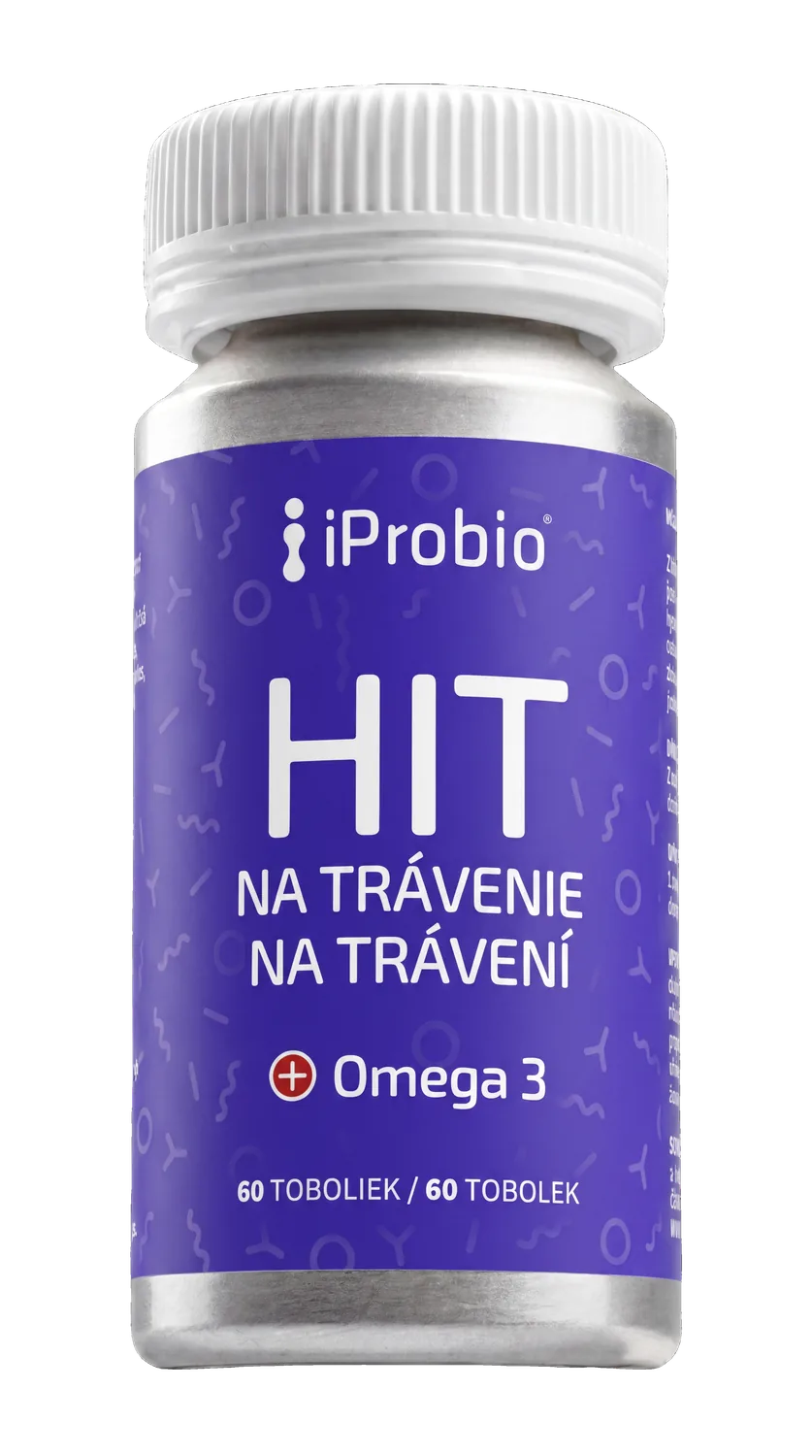
HIT na Trávenie+®

5 identified strains · 20 bn CFU/day · 208 mg EPA+DHA · L-lysine12

From research to formulation
HIT combines precisely identified strains with companion ingredients. Omega-3 is part of one formulation together with bacteria and L-lysine.
Five strains
The same five selected bacterial strains were studied in an independent human clinical trial in a precisely defined group of people.8
Why HIT contains omega-3
HIT contains 136 mg EPA and 72 mg DHA in the daily dose. In earlier research by Dr Bomba, omega-3 fatty acids increased adhesion of Lactobacillus paracasei to the jejunal mucosa (middle part of the small intestine) in gnotobiotic piglets; the difference appeared specifically in the jejunum.5

What the studies showed: A human clinical study followed the effect of the same combination of five bacterial strains. Omega-3 research examined their role as part of the formulation in a preclinical model. We continue to validate the complete HIT formulation.

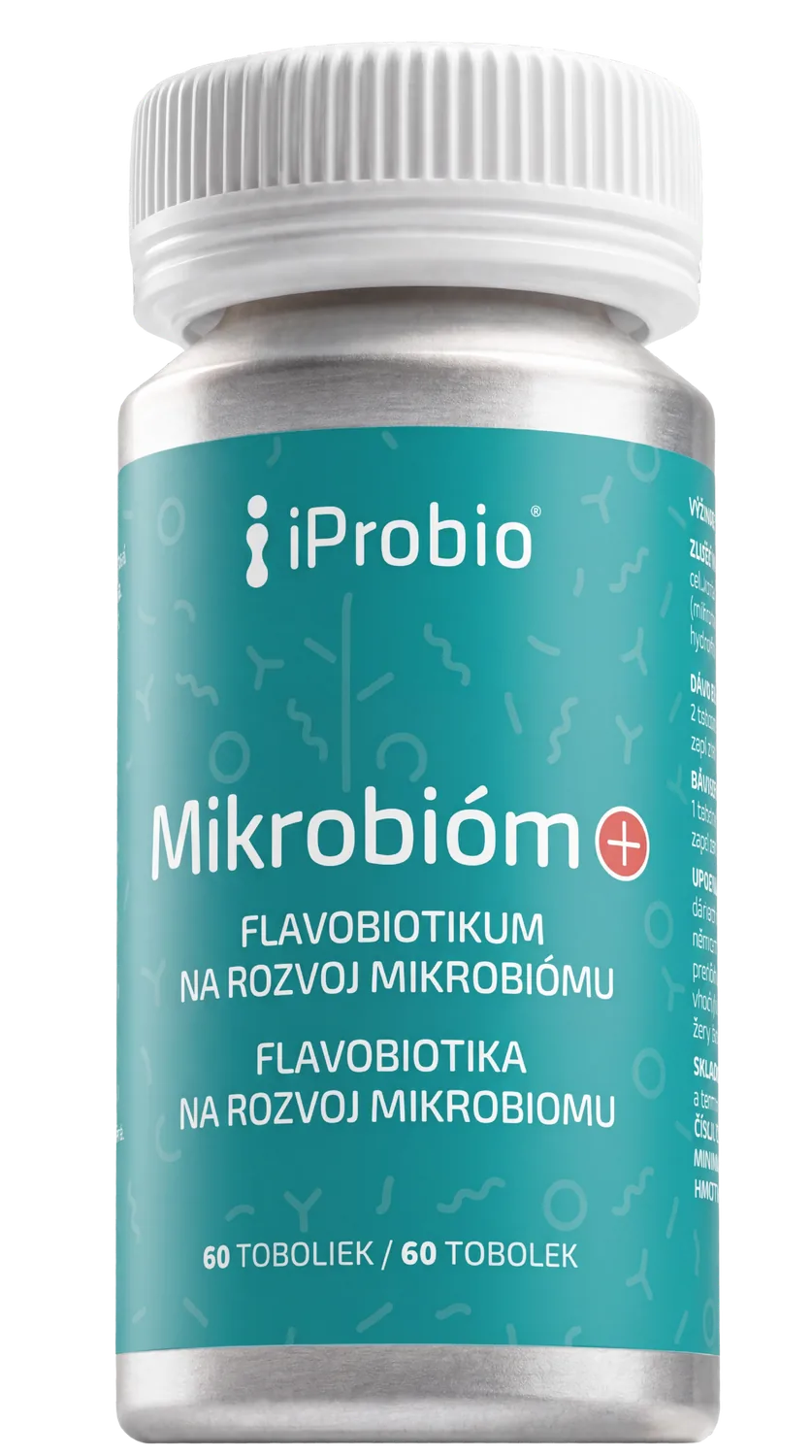
Mikrobióm+® · polyphenols

400 mg hesperidin · 32 mg naringin · purely plant flavonoids14

From research to formulation
It builds on the broader question of how natural bioactive compounds (substances from natural sources that may act on immunity, metabolism and other body functions) change the microbial environment. A specialised external team developed and examined the specific citrus extract.
Preclinical research on the ingredient
In the dynamic TIM-2 laboratory model (which mimics conditions in the human gut), the representation of several bacteria including Roseburia changed; the fatty acid profile including acetate and butyrate also changed.13
Human evidence for the ingredient
In a 12-week RCT (randomised controlled study with participants randomly assigned to comparison groups) with 500 mg extract and 50 completed participants, the share of the beneficial fatty acid butyrate among other fatty acids in the gut environment increased. The study was funded by the manufacturer of the extract studied.15

What the studies measured: the citrus extract alone at a dose of 500 mg. We also validated today's Mikrobióm+® product formulation in our own consumer study, available on our website.

How to read the evidence

The path from research to the final formulation.

1 · MechanismCells or gut model
2 · PreclinicalAnimal model
3 · ClinicalSpecific people and intervention
4 · Finished productExact current formula and dose

HIT · five strainsLevel 3: independent RCT in a narrow group; clinical support for selected probiotic ingredients, but with a different dose and without the omega-3/L-lysine combination of final HIT.

HIT · omega-3Level 2: gnotobiotic piglets; preclinical data that contributed to selecting and setting the omega-3 component in the final HIT formulation (different strain and intervention from today's HIT).

Mikrobióm+® · extractLevels 1 and 3: laboratory model and smaller human RCT of the ingredient alone; results support the biological potential of that ingredient, not the final Mikrobióm+® formulation.

Complete HIT / Mikrobióm+®Today's precise product formulations draw on knowledge gained at levels 1 to 3; further validation continues.

Why we state this? Each type of research brings a different part of the answer. Laboratory and preclinical studies help design the formulation; clinical studies show how it performs in people.

Verifiable sources

Sources used in this timeline

Primary scientific papers, official university records and public registers take priority. Product composition comes from current iProbio pages.

  1. History of the UPJŠ Institute of Experimental MedicineOfficial institutional record: founded in 1984 and leadership from 2006.
  2. Professional CV of Alojz BombaChronology of education and publications from 1983.
  3. CVTI interview on gnotobiologyEstablishment of the facility in 1990, methods and research questions.
  4. Bomba et al., British Journal of Nutrition, 2002Concept of combining microorganisms with FOS, maltodextrins and PUFA.
  5. Bomba et al., 2003: omega-3 and L. paracaseiControlled experiment in gnotobiotic piglets.
  6. UPJŠ research projectsProbiotics, bioactive compounds, lipid metabolism and microbiota.
  7. Technology transfer award, 2015Official UPJŠ record; separate application branch.
  8. Francavilla et al., 2019RCT of five strains in 109 adults with coeliac disease and persistent IBS-like symptoms.
  9. Commercial Gazette: founding of PerBiotiXPublic registration record from May 2020.
  10. PerBiotiX: history and transferCompany source on iProbio market entry and cooperation with UPJŠ.
  11. Bomba & Haranta, 2023Framework for personalised and targeted modulation of the gut microbiome.
  12. Current composition of HIT na Trávenie+®Five strains, daily dose, omega-3 and L-lysine.
  13. Sost et al., Nutrients, 2021Polyphenol extract in the dynamic TIM-2 in vitro model.
  14. Current composition of Mikrobióm+®Hesperidin and naringin; product source.
  15. Maurer Sost et al., Foods, 202312-week RCT with 500 mg citrus extract; study of the ingredient alone.
  16. National Academies: gnotobiotic modelsTerminology: germ-free animal and model with precisely defined microorganisms.

What to take from this

The value of 40+ years is in the discipline: distinguishing strain, dose, mechanism and strength of evidence, and showing openly how research leads to each formulation.

They wrote about us

From Forbes to the national science portal

109 articles in Slovak media in 2025.

Forbes Pravda JOJ 24 360tka TA3 TV Markíza — Teleráno STVR SME TASR SITA Startitup Postoj Veda na dosah (CVTI SR) Žilinský večerník
"We launched production two years ago and currently have thousands of clients every month and very positive feedback."
Martin Haranta · Forbes
"Probiotics are not a matter of faith, but of scientific and clinical evidence."
MVDr. Alojz Bomba · Žilinský večerník
"If you find a product that lists only <em>Lactobacillus acidophilus</em> without a number, that is a sign of poor quality."
Martin Haranta · Veda na dosah (CVTI SR)
"Probiotics are more like guided missiles."
MVDr. Alojz Bomba · Pravda
"The quality and health of our gut significantly affects our whole life, not just our mental state but also our physical health."
Martin Haranta · Teleráno, TV Markíza
"The microbiome is connected, in essence, to every system in the body."
Martin Haranta · 360tka.sk

A selection of media coverage of the brand and its founders. Logos belong to the respective media.

Who iMunobiom+® is for

It is not just another “immunity” supplement. We designed its composition with the specific needs of children and adults in mind.

Families with children

Nursery, school and viruses circulating through the whole household. One formulation for children and adults that fits into the daily routine.

Frequent, repeated colds

One passes and a few weeks later the next one arrives. You are looking for a longer-term approach to immunity, not just something for the first symptoms.

When you watch the composition

Both CRL 1505 and yeast beta-glucans are clinically studied. The formulation is completed by vitamin D3 from lichen – a vegan source.

Frequently asked questions

How is it different from ordinary “vitamin C for immunity”?

iMunobiom+® is not built on a single ingredient or short-term seasonal use. It combines strain CRL 1505, clinically studied yeast beta-glucans and vitamin D3 in one formulation designed for regular, longer-term use.

Is it suitable for children?

Yes. iMunobiom+® is intended for children aged 3 to 12. The recommended dose is 1 capsule daily.

Why vegan vitamin D3?

Because origin matters too. We chose D3 from lichen instead of the commonly used lanolin from sheep’s wool – no animal source, and suitable for vegans.

Does CRL 1505 produce histamine?

No. Strain CRL 1505 does not produce histamine. It is also resistant to stomach acid and bile.

Can it be combined with other iProbio products?

Yes. You can combine iMunobiom+® with other iProbio products. It can be taken at the same time as Mikrobióm+®; with HIT na Trávenie+® we recommend a time gap – one product in the morning and the other in the evening.

What customers say

Real experiences and ratings from iProbio users.

Facebook review: son in kindergarten, taking probiotics since September and staying healthy
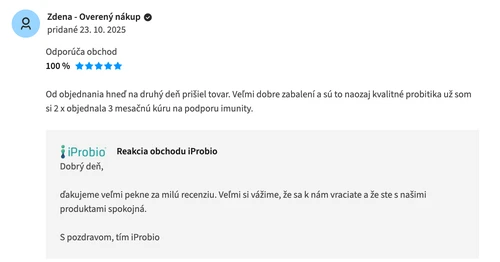
Verified Heureka.sk review: customer ordered a 3-month immunity course for the second time
Verified Heureka.sk review: the whole family has been using probiotics and prebiotics for 2 years
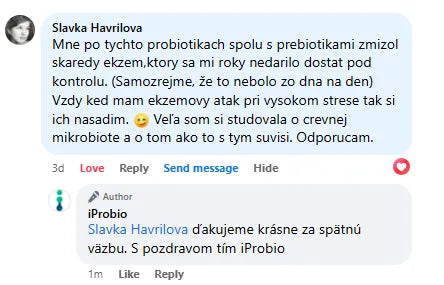
Facebook review: iProbio customer
Verified Heureka.sk review: highest quality, recommended by a friend
Verified Heureka.sk review: professional customer line that advises rather than pushing sales
Verified Heureka.sk review: regular customer, quality 5 out of 5
Facebook review: Mikrobióm+ customer

Support immunity from where it begins

One of the most studied bacterial strains. Vitamin D3 and beta-glucans. 40 years of microbiome research.
1 month · 44,06€
3 months · 115,99€ · You save 42,27€
6 months · 223,89€ · You save 118,71€
Order iMunobiom+®
Delivery within 24 hrs 30-day money-back guarantee Secure payment
Limited edition · until sold out
Family pack for 4737,36€ 449€
12× iMunobiom+® + 8× Mikrobióm+® gift · each person gets a full 3-month course and 2 gifts
Until sold out · Left 15 of 50
★ Heureka: 99 % recommend · 178 reviews · Facebook: 98 % · 37 reviews

Why iMunobiom+® and Mikrobióm+® together

In a minute you will see what the pack contains, how the two products complement each other and why we combined them. Their composition is based on scientific findings, which we also present through the most important studies.

Think of your microbiome as a garden.

iMunobiom+® iMunobiom+® = the plant It brings a specific strain, Lacticaseibacillus rhamnosus CRL 1505, with extensive scientific research. It is complemented by vitamin D3, which contributes to the normal function of the immune system.
Mikrobióm+® Mikrobióm+® = the soil It brings the citrus flavonoids hesperidin and naringin, whose relationship to the gut microenvironment is a subject of research. A laboratory model also examined their relationship to butyrate-producing bacteria.

A good plant needs good soil. That is why both products are in the pack – each with a different, complementary role.

The journey through your body, step by step

The journey of iMunobiom+ and Mikrobióm+ through the digestive tract. Both capsules pass through the digestive tract. In the small intestine, research focuses on the interaction of strain CRL 1505 with the immune system; citrus flavonoids continue to the colon, where gut bacteria convert them into hesperetin and naringenin metabolites. 1 · STOMACH IMUNOBIOM+ + MIKROBIÓM+ Both capsules continue from the stomach further along the digestive tract. CRL 1505 is also studied for its resistance to stomach acid and bile. 2 · SMALL INTESTINE IMUNOBIOM+® CRL 1505 reaches the gut environment, where research focuses on its interaction with the immune system. MIKROBIÓM+® A significant part of citrus flavonoids continues further along the digestive tract towards the colon. 3 · COLON MIKROBIÓM+® Here gut bacteria convert hesperidin and naringin into hesperetin and naringenin metabolites. In a laboratory model, citrus flavonoids were also observed to support growth of butyrate-producing bacteria. IMUNOBIOM+® The gut and immune system are closely linked. The relationship of CRL 1505 to immune response in the gut environment is among the areas of its research.
Simplified illustrative diagram. It shows the processes under study and the research context of the individual ingredients.
In one sentence: iMunobiom+ brings a strain studied in immune research, plus vitamin D3. Mikrobióm+ looks after the gut environment, where a large part of immunity resides. Each has its own role on the same axis.

Two products. Two different formulations.

iMunobiom+®
  • Lacticaseibacillus rhamnosus CRL 1505 – 1 billion viable bacteria in the daily dose}
  • Yeast beta-glucans from Saccharomyces cerevisiae – 450 mg in the daily dose}
  • Vegan vitamin D3 from lichen – 800 IU}
  • CRL 1505 has extensive scientific research, including clinical research in children
  • The strain does not produce histamine or other biogenic amines
Mikrobióm+® gift
  • Citrus flavonoids hesperidin and naringin
  • Derived from unripe oranges and grapefruit
  • The formulation is built on citrus polyphenols without added bacterial strains
  • Hesperidin and naringin are studied in the context of the gut environment
  • Research also follows their relationship to butyrate-producing bacteria, an important part of the gut environment

How to take them: morning, one glass of water

1
iMunobiom+® Adults 2 capsules daily, children aged 3 to 12 1 capsule daily. Take in the morning on an empty stomach with a glass of water. One pack lasts an adult 1 month, a child 2 months.
2
Mikrobióm+® Take according to the dosage on its pack. Mikrobióm+® is a separate product with its own composition and dosage – in the pack they complement iMunobiom+®, but each is taken on its own.

And that is all. Two products, one simple daily routine. We recommend regular use for at least 3 months.

That is why both are in the pack. The strain you bring. And the environment you look after. Reserve the family pack

Food supplements. They do not replace a varied, balanced diet or a healthy lifestyle. The studies cited concern individual ingredients, not their combination.