Processes fibre
Gut bacteria break down part of the fibre that reaches the large intestine. This produces short-chain fatty acids. One of them, butyrate, serves as a source of energy for the cells of the intestinal lining.
What lives in your gut and what does it do there? Get to know the gut microbiome, its roles in the body and the difference between probiotics, prebiotics and fermented foods.
The gut microbiome consists of bacteria and other microorganisms together with their genes and the environment in which they live. Its composition differs from person to person and changes throughout life.
Microbiota refers to the microorganisms themselves; the microbiome also includes their genes and environment. The older term “gut microflora” names this community. Cell ratio: Sender et al., 2016. Development in childhood: Stewart et al., 2018.
Gut bacteria break down part of the fibre that reaches the large intestine. This produces short-chain fatty acids. One of them, butyrate, serves as a source of energy for the cells of the intestinal lining.
The gut wall contains immune cells that respond to signals from the gut. Contact with microorganisms contributes to the maturation of the immune system and to how it reacts to its surroundings.
The gut and the brain exchange signals through nerves, including the vagus nerve, hormones and the immune system. Substances produced by gut microorganisms also take part in this communication. Research is exploring what role these signals play in humans.
The composition of the microbiome is influenced by diet, age, environment and the medicines taken. Scientists follow the diversity of microorganisms, their relative representation and the substances they produce. These data are assessed together with the health status of the individual person.
A simple start: add a portion of vegetables or pulses to today’s lunch. Fibre data: EFSA, 2010.
The microbiome is the whole community in the gut together with its environment. Probiotics are live microorganisms that we take in from outside. Their health benefit is verified for specific strains, amounts and uses.
These are examples of fermented foods. In their production, microorganisms transform the components of the food and create its typical taste. The content of live cultures also depends on further processing, for example heat treatment.
Analysis of a stool sample can show which microorganisms are present in it. It captures the state at the time of collection. The meaning of the result depends on the method used and is assessed together with diet, medicines and health status.
Changes in diet can show up in its composition within a few days. How long they last depends on several factors, including the original composition of the microbiome and long-term eating habits.
A study may follow the composition of the microbiome, the substances produced by its activity, or a change in health status. Our science team explains how to read these results and put them in context.
Microbiomics vs. metabolomics vs. clinical endpoint
Imagine the gut microbiome as a busy city. Microbiomics takes a census of its inhabitants and shows who is in it. Metabolomics looks into the shops and factories and finds out what is being produced in the city. The clinical endpoint finally asks the most practical question: is life in this city better for its inhabitant? Each of these views brings a different part of the answer (1, 2).
In study results we often read that a certain diet, probiotic or other intervention “changed the microbiome”, “increased the level of a beneficial metabolite” or “improved clinical outcomes”. Although all three statements may sound positive, they do not mean the same thing. A biological change does not necessarily bring a health benefit that a person feels in everyday life (3, 8).
| Perspective | What does it monitor? | What do we still not know from the result? |
|---|---|---|
| Microbiomics | Which microorganisms, genes and metabolic pathways are present in the gut | Whether the genes present are actually active and whether the change brings a health benefit |
| Metabolomics | What small molecules are found in stool, blood or urine | Who exactly produced the metabolite and whether its change improved health |
| Clinical endpoint | Pain, bloating, stool frequency and consistency, quality of life, remission or occurrence of diseases | By what biological mechanism the improvement came about |
Table 1: Microbiomics, metabolomics and clinical endpoints capture different but complementary levels of information (2–6).
Microbiome analysis examines the microorganisms that live in our gut. With it, scientists find out which bacteria are present, in what proportions and which genes or metabolic pathways they carry. It is a bit like a list of a city’s residents together with information about what occupations they might have. The mere entry “baker”, however, does not prove that the person is baking bread right now. Similarly, the presence of a microbial gene does not mean it is active at that moment (4, 5).
The situation is further complicated by so-called functional redundancy. Behind this technical name lies a fairly simple idea: different microorganisms can perform a similar role. In one large study, unrelated people shared on average only 43 % of microbial species, but as many as 82 % of metabolic pathways. The composition of their microbiome therefore differed, but its functional potential was much more similar. That is why the health of the microbiome cannot be judged solely by the presence or absence of a single bacterium (4).
Metabolomics does not assess microorganisms directly, but the small molecules produced during metabolism. These include, for example, short-chain fatty acids, bile acids, indoles, amino acids or products of polyphenol processing. Their abundance in stool, blood or urine creates a kind of chemical fingerprint of what was going on in the body at the time the sample was taken (5, 6).
This fingerprint is closer to function than a mere list of microorganisms, but even it does not give a complete answer. A metabolite may be produced by the microbiome or by the human body, or may come from food. It often arises only through their combined action. The result is also influenced by the last meal, medicines taken, speed of digestion and the time of sampling. Metabolomics therefore works best in combination with microbiome analysis and other data on a person’s state of health (5, 7).
If scientists find a certain bacterium or metabolite more often in people with specific complaints, it does not yet prove that the microorganism or substance causes those complaints. The change may also be their consequence or may be linked to diet, medication or other factors. Proving cause requires interventional studies and results that link a change in the microbiome, its function and a person’s state of health (11).
A clinical endpoint is an outcome that shows how a person feels or functions. For gut health it may be a relief of pain and bloating, more regular stools, fewer days with digestive complaints or better quality of life. Even subjective complaints can be a valuable scientific outcome if they are measured using validated questionnaires and in a well-designed clinical study (2, 3).
Here we often run into a small terminological trap. A change in a bacterium or metabolite may be labelled in a study as the “primary endpoint”. The word primary, however, only means that it is the main, pre-specified outcome of the study. It does not automatically mean that a health benefit was demonstrated. A biological marker can replace a clinical outcome only when it has been reliably verified that its change predicts a change in health status. For most microbiome and metabolomic markers we do not yet have such verification (3, 8).
A good example is the low-FODMAP diet in irritable bowel syndrome. A summary of clinical studies shows that it can ease overall IBS symptoms, abdominal pain and bloating. A separate meta-analysis, however, found that during this diet there was a fall in the abundance of bifidobacteria, which are commonly regarded as a beneficial part of the microbiome. A clear change in overall microbial diversity or in the concentrations of short-chain fatty acids was not confirmed (9, 10).
It is not proof that a low-FODMAP diet is “good” according to the clinic but “bad” according to the microbiome. It shows that one isolated data point cannot capture the whole gut ecosystem or a person’s state of health. A fall in one group of bacteria does not have to cancel out clinical improvement and, conversely, even a favourable change in a metabolite does not yet guarantee relief of complaints. Results must always be interpreted together and in the context of the specific person, intervention and disease (10, 11).
What did the scientists measure? If a study reports an “improvement in the microbiome”, look at whether it actually monitored the participants’ state of health or only a change in the proportions of bacteria. Both pieces of information are valuable, but they answer a different question (3).
How was the study designed? A result carries more weight if it was pre-specified, the study had a control group, a sufficient number of participants and also tracked diet, medication and other factors that influence the microbiome. Without this information even an interesting finding is harder to interpret (1, 12).
Do the individual layers of evidence agree? A result is more convincing if a change in the microbiome is accompanied by a change in its function and, at the same time, an improvement in health. If the results do not agree, the study does not automatically lose its value – the mechanism may be more complex than we assumed (1, 11).
Microbiome science is not moving from one method to another, but towards linking them. The better it can follow the path from microorganisms through their metabolites to a person’s state of health, the more precisely we understand not only that something has changed, but also why and with what significance (1, 2, 11).
Similar names refer to different things. This is a brief overview based on the definitions of the International Scientific Association for Probiotics and Prebiotics (ISAPP).
Live microorganisms that, when administered in adequate amounts, bring a health benefit. For a specific preparation, the identified strains, their amount and the evidence for the given benefit are what matter.
ISAPP consensus, Hill et al., 2014Substances that certain microorganisms in the body use, thereby bringing a health benefit. These include, for example, some types of fibre.
The “prebiotic” label requires evidence of this use as well as of a health benefit. ISAPP consensus, Gibson et al., 2017A mixture of live microorganisms and substances that are selectively used by microorganisms in the body. This combination must bring a health benefit.
ISAPP consensus, Swanson et al., 2020A preparation of inactivated microorganisms or their components with a demonstrated health benefit. Inactivated means the microorganisms are no longer alive.
A postbiotic includes microbial cells or their components. Isolated butyrate on its own is a metabolite. ISAPP consensus, Salminen et al., 2021Foods made by the targeted growth of microorganisms and the transformation of the food’s components. They include, for example, yoghurt, sauerkraut or sourdough bread.
The content of live cultures depends on processing. The “probiotic” label also requires meeting the definition of probiotics. ISAPP consensus, Marco et al., 2021When reading a package, start with the ingredients. For probiotics, look for the strain designation and its amount in the daily dose. Research then shows what has been studied with those strains and doses.
Come across an unfamiliar word? Look it up in the glossary or open the explanation next to the ⓘ symbol on our science pages.
No term matches your search.
From fibre in the diet to communication between the gut and the brain. These articles contain more detailed explanations.
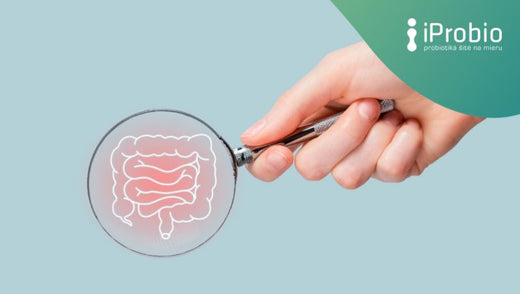
Who lives in the gut and what roles they play there.
Read
A series of conversations about the microbiome and what influences it.
Read
What these names mean and how to find your way around them.
Read
The relationship between live microorganisms and the substances they use.
Read
Flavonoids and their relationship with gut microorganisms.
Read
How gut microorganisms use components of food.
Read
What this term means and the contexts in which it is used.
Read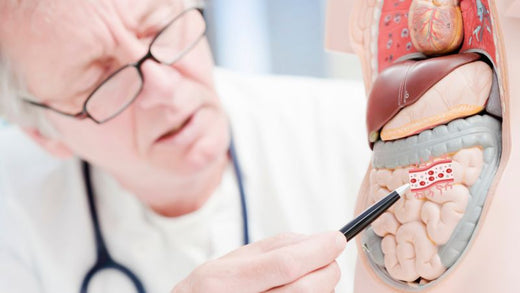
A two-way connection between the gut and the nervous system.
Read
Recommended fibre intake and its sources in everyday foods.
ReadThe quiz walks you through questions about your specific complaints. Based on your answers, it recommends iProbio products for your situation.
