Endometriosis: When Your Body Says “No.” Could the Answer Be Hidden in Your Gut?
“It’s just a heavy period, it will pass.” “Don’t be so sensitive, every woman goes through pain.” If you are struggling with endometriosis, you have probably heard these words for years. The truth, however, is that you are going through a silent war in which your body is fighting itself. But what if we told you that the key to calming this battle may not lie only in your ovaries, but also in the billions of friendly bacteria living inside you? Let us take a closer look at why the path to relief from endometriosis may lead through your gut.

What Is Actually Happening Inside Me?
Endometriosis is somewhat of a “misplaced” condition. Imagine tissue that behaves exactly like the lining of your uterus, but instead of staying where it belongs, it settles elsewhere – on the ovaries, intestines, or bladder. When your cycle begins, this tissue bleeds just like the uterus does, but it has nowhere to drain. The result? Chronic inflammation, scar tissue, and pain that can disrupt your life (1).
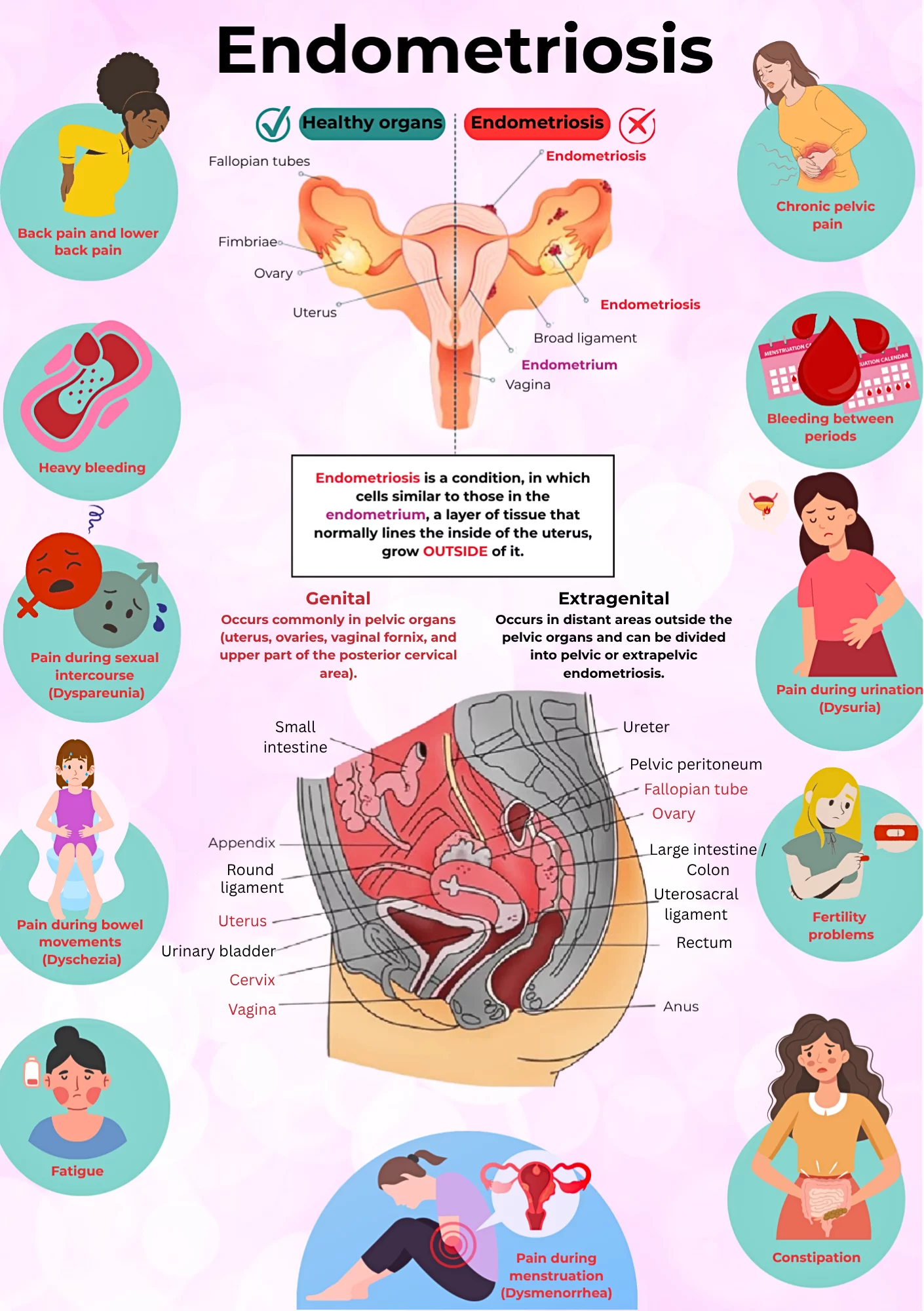
Fig. No. 1: Schematic representation of the localization and symptoms of endometriosis.
You are not alone. This diagnosis affects one in every ten women. It is a master of disguise, bringing not only debilitating cramps but also pain during intimate intercourse, chronic fatigue, and, in half of the affected women, a difficult journey toward conceiving a desired baby. It is often found not only in the pelvis but surprisingly also in distant locations such as the lungs or diaphragm. (2).
The vicious cycle of diagnosis and treatment
The average Slovak woman waits 7 to 10 years for a confirmed diagnosis of endometriosis. Why? Because the symptoms are often confused with irritable bowel syndrome (IBS), inflammatory bowel diseases (IBD), or common cramps. And once you do receive a diagnosis, treatment options are limited: either a scalpel that removes lesions (often only temporarily), or hormones that “switch off” the body but bring with them a cascade of side effects (3).
Table 1: Comparison of symptoms of inflammatory bowel diseases (IBD – from the English Inflammatory Bowel Diseases), such as Crohn’s disease and ulcerative colitis (UC); irritable bowel syndrome (IBS – from the English Irritable Bowel Syndrome); and endometriosis (compiled based on diagnostic criteria from Rome IV (for IBS), ECCO guidelines (for IBD), and the study by Talwar et al., 2025).
Symptom | IBD (Crohn’s / UC) | IBS (Irritable Bowel Syndrome) | Endometriosis |
|---|---|---|---|
Type of pain | Severe cramps, often in the lower right abdomen or throughout the abdomen. | Cramping associated with bloating, often relieved after bowel movement. | Pelvic pain, severe menstrual cramps, pain during intercourse. |
Changes in stool | Frequent diarrhea, urgency (tenesmus). | Alternating diarrhea and constipation. | Constipation or diarrhea, often cycle-related. |
Blood in stool | Blood, mucus, pus. | Only mucus (blood is not typical). | Blood in stool only during menstruation (rare). |
Weight loss | Common and unintentional. | Rare (usually diet-related). | Not typical. |
Night symptoms | Pain or diarrhea may wake you up. | Usually no symptoms at night. | Pain may persist at night, especially related to the cycle. |
Temperature / Fever | Often elevated (sign of inflammation). | Not present. | Rare (may be slightly elevated during menstruation). |
Cyclic nature | Independent of the menstrual cycle. | May worsen before menstruation. | Strong link to the menstrual cycle. |
Other symptoms | Joint pain, eye inflammation, skin changes. | Anxiety, stress, fatigue, bloating. | Infertility issues, painful urination. |
This is where modern science has paused and asked the question: Is there another path? One that is less invasive and targets the root cause of inflammation?
A new scientific paradigm: The gut–endometriosis axis
You may not have previously considered a connection between a bloated abdomen and debilitating pelvic pain. Most women separate these symptoms: they address pain with a gynecologist and digestive issues with a gastroenterologist. However, the latest scientific evidence (4,5) shows that these are two sides of the same coin. Researchers are introducing a revolutionary concept: the gut–endometriosis axis.
This axis is not just a theoretical concept. It is a real biological and genetic “highway” through which continuous communication takes place between your microbiome and endometriotic lesions. Studies suggest that endometriosis is a systemic disease in which gut dysbiosis (microbial imbalance) directly shapes the inflammatory environment in the pelvis. When specific bacterial strains are missing in the gut, the intestinal barrier loses its energy source. As a result, it weakens and becomes “leaky” (leaky gut) (4,5).

Fig. No. 2: The gut and uterus are not isolated islands, but a connected system. The entire process works through five key steps: (1) Diet and lifestyle: Everything begins with your diet and lifestyle, which directly influence the composition of gut bacteria. (2) Hormonal control: The gut microbiome acts as a control center for estrogen. When the gut is healthy, it helps eliminate excess estrogen (a fuel for endometriosis) from the body. (3) and (4) Inflammation development (Imbalance / Pro-inflammatory state): When bacterial imbalance occurs, the gut releases an “inflammatory cocktail” into the body: LPS (Lipopolysaccharides): Components of the outer walls of harmful bacteria that act as toxins. IL-6 and TNF-α (Cytokines): Chemical signals that trigger an immune alarm in the body and promote the growth of endometriotic lesions. (5) Beneficial messengers (SCFAs): In contrast, healthy bacteria produce SCFAs (short-chain fatty acids). These act as “firefighters” that reduce systemic inflammation and calm the immune system. (6) Direct dialogue (Bidirectional axis): The central arrows show that there is constant exchange of bacteria and immune cells between the gut and the uterus. If inflammation is present in the gut, it is directly transferred to the pelvis. (In the figure: large purple arrows in the center) (adapted from Zhang et al., 2025).
Through this weakened barrier, inflammatory substances and pro-inflammatory immune cells (macrophages) escape and travel directly to endometriotic lesions, where they “feed” them with inflammation. The gut–endometriosis axis suggests that the state of your gut directly determines how aggressively the disease behaves. This relationship is bidirectional: a diseased gut worsens endometriosis, and pelvic inflammation in turn further damages the gut microbiome (4,5,6,11). Breaking this vicious cycle is key to a new approach in supporting women’s health.
4-Hydroxyindole: Your natural ally
At the core of the gut–endometriosis axis, scientists have identified a key molecule called 4-hydroxyindole (4HI). It is a compound produced by “good” gut bacteria (e.g., Faecalibacterium). While in healthy women 4HI acts as a natural shield, in women with endometriosis it is almost completely absent.
Research has confirmed that when this metabolite is restored in the body, endometriotic lesions shrink, pain decreases, and inflammation is reduced. This intervention does not negatively affect temporary fertility loss; on the contrary, our products are designed to be safely used even during the period when you are actively trying to conceive. (5).
How to support the body in endometriosis: More than symptom management
Although the most widely accepted theory of endometriosis development remains retrograde menstruation—a condition in which menstrual blood does not only exit the body but also flows backward into the abdominal cavity—scientists agree that a key role in disease progression is played by chronic inflammation. This is what determines whether “displaced” tissue implants in the abdomen and how severe the pain becomes (1,2,3).
If we consider that this inflammation can be significantly driven and amplified by processes in the digestive tract (5,7,8), modern supportive care must also focus on “clearing” this internal environment. The intervention used is therefore not a random combination of supplements, but the result of a rational selection based on their known biological effects in the body and their potential to influence key processes along the gut–endometriosis axis.
This approach helps the body better manage the consequences of retrograde menstruation by calming the immune response and reducing digestive discomfort, which often accompanies pelvic pain (Fig. 2).
1. POWERbiom+®: The “sealant” for your gut barrier
A study by Prof. Talwar et al. from the USA clearly states: in patients with endometriosis, the gut barrier is often weakened (so-called leaky gut). POWERbiom+® is designed as a first step to restore this barrier.
- Mechanism: It contains high-quality galacto-oligosaccharides (GOS), which act as selective “super-fuel” for beneficial bacteria (e.g., Bifidobacterium and Faecalibacterium prausnitzii).
- Fighting inflammation (dual action):
✅ Butyrate – the “repairer”: Feeding these bacteria leads to the production of butyrate, a fatty acid that literally “seals” the tight junctions between intestinal cells. A strong gut barrier prevents inflammatory substances from spreading.
✅ 4-hydroxyindole (4HI) – the “protective shield”: A healthy microbiome supported by POWERbiom+® can also efficiently produce 4HI. This metabolite acts as a natural inflammation brake, preventing immune cells in the pelvic cavity from transforming into aggressive forms that would otherwise promote lesion growth and pain. - Result: The synergy of butyrate and 4HI strengthens the gut barrier and reduces systemic inflammation. For women, this means relief from unpleasant symptoms and a calmer internal environment, especially important when trying to conceive and preparing the body for a healthy pregnancy (5,7).
2. Mikrobióm+®: The “firefighter” of chronic inflammation and protector of 4-hydroxyindole
This is our unique flavobiotic. While standard probiotics add bacteria, Mikrobióm+® changes the environment in which they live, allowing beneficial metabolite-producing bacteria to thrive.
- Mechanism: It uses citrus flavonoids (hesperidin). Clinical studies have shown it can significantly reduce fecal calprotectin, a key marker of intestinal inflammation.
- Support of 4HI: Recent research shows that harmful bacteria (e.g., genus Dorea) should be suppressed to allow space for bacteria producing protective 4-hydroxyindole. Mikrobióm+® does exactly this—it selectively modulates the microbiome to reduce inflammation and support beneficial metabolite production.
- Relief from “endo-belly”: By regenerating the gut lining, it helps reduce bloating and cramps that affect patients regardless of the cycle phase (5,8).
3. LADYbiom+®: Balance where life begins
Endometriosis significantly affects not only the gut but also the vaginal environment. Studies show that women with endometriosis often have a disrupted vaginal microbiome, which may further worsen pelvic inflammation. LADYbiom+® addresses this through a different principle than gut-focused approaches.
- The golden rule of low diversity: While gut health requires high bacterial diversity, the vaginal microbiome is the opposite. A healthy vaginal environment should be low in diversity, dominated by lactobacilli.
- Narrow-spectrum lactobacilli: LADYbiom+® contains the scientifically validated strain L. rhamnosus CA15, which colonizes the vaginal mucosa and produces lactic acid, lowering pH.
- Link to endometriosis: An acidic environment is crucial because it prevents the overgrowth of pathogens that could otherwise migrate toward the uterus and pelvis, where they could further irritate endometriotic lesions.
- Comfort and mental health: Added saffron helps manage emotional stress, which is closely linked to chronic pain in endometriosis (9,10).
Why does this triple combination make sense?
Scientific research on the gut–endometriosis axis has shown that this condition cannot be addressed from only one direction.
- POWERbiom+® restores the barrier, prevents inflammatory leakage from the gut, and supports metabolite production such as 4HI.
- Mikrobióm+® calms inflammation directly in the digestive tract and supports beneficial metabolites like 4HI.
- LADYbiom+® protects intimate health, maintaining low pH and low diversity where it is essential for women’s wellbeing.
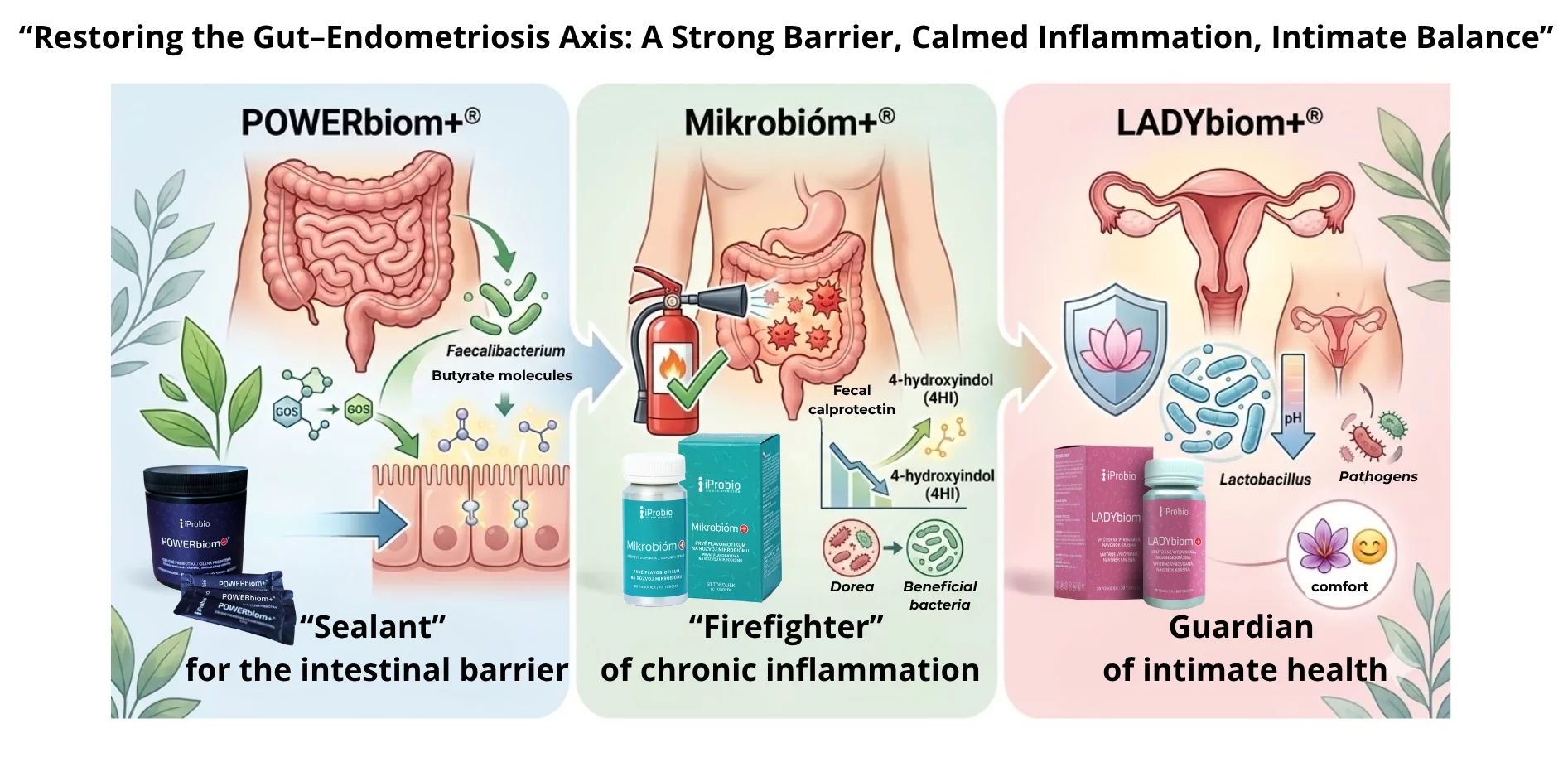
Together, these products create a comprehensive support system that does not merely respond to symptoms, but aims to change the internal conditions of your body so that endometriosis loses its “fuel.” It is precisely this combination of scientific precision and respect for female biology that makes our product line a unique ally for every woman on her journey toward health.
We are writing the future together (Our scientific study)
We recognize that each of you is unique and deserves solutions based on real-world data. Therefore, we are proud to announce that, in close collaboration with MUDr. Martin Němec, MBA and leading Czech experts, we are conducting an ambitious scientific study.
What is the goal of our study? We are evaluating the impact of a three-month targeted intervention using our products on the quality of life of women with endometriosis. The entire process is carried out under strict medical supervision, with participants being assessed through specialized ultrasound examinations (before and after the intervention) as well as detailed patient-reported questionnaires.
- Main objective: We aim to achieve a measurable improvement in condition that enables women to return to normal life without debilitating pain.
- Secondary objective: We are evaluating whether our regimen can contribute to a reduction in ovarian lesions.
We believe this approach has strong potential to become a recognized combination therapy that complements existing medical treatments and offers women safer and more effective support in their daily struggle with this condition. We will keep you updated on the detailed protocol and results.
FAQ: What you are most interested in
-
It is a sign that inflammation from the pelvis is irritating your intestines. Targeted nutrition of the microbiome can help reduce this pressure.
-
Everything is connected. Science today confirms the existence of the gut–endometriosis axis. The gut is not just a tube for processing food; it is the largest immune organ. When there is an imbalance in it (dysbiosis), inflammatory cells and toxins can escape through a “leaky” intestinal wall directly into the abdominal cavity, where they may irritate endometriotic lesions. A healthy gut therefore acts as a primary protective shield that “switches off” the spread of inflammation toward the pelvis.
-
“Endo belly” is a term for a painful, bloated abdomen that often accompanies endometriosis. It is not typical food-related bloating, but a sign of inflammation in the pelvis that irritates the intestines. Mikrobióm+® acts like a “firefighter” of this inflammation. Thanks to citrus flavonoids, it helps regenerate the intestinal lining and reduce levels of inflammatory markers, which brings relief from pressure and cramps.
-
Probiotics alone do not remove endometriosis lesions, but they can change the body’s environment in a way that makes it less favorable for the lesions to thrive. A breakthrough study (5) showed that the compound 4-hydroxyindole (4HI), produced by beneficial bacteria, can reduce lesion size in experimental models. Products such as POWERbiom+® support the growth of these bacteria that produce protective substances, thereby helping to slow down disease progression.
-
Most probiotics aim for maximum diversity. However, in women’s health, the opposite is true – in the vaginal environment we want low diversity with a strong dominance of lactobacilli. LADYbiom+® contains a specific strain, L. rhamnosus CA15, which helps maintain an acidic pH. This is crucial for patients with endometriosis, because an acidic environment prevents pathogens from migrating upward to the uterus and further irritating lesions in the pelvis.
-
Yes, and that is one of the biggest advantages of this approach. Unlike hormonal treatment, which suppresses the menstrual cycle, our products support the body’s natural processes. By reducing systemic inflammation and regulating the microbiome, they create a more favorable environment in the body for conception. LADYbiom+® also helps protect the integrity of the vaginal environment, which is very important when trying to conceive.
-
The microbiome needs time to be reprogrammed. While some women experience relief from bloating (endo belly) within the first weeks of using Mikrobióm+® and POWERbiom+®, a longer-term use (at least 3 months) is recommended for deeper changes in the inflammatory state of the gut–endometriosis axis. Long-term stability of the intestinal barrier is key to reducing chronic pain.
List of scientific references
- Redecha, M. (2020). Endometriosis: A Guide for Patients. Bratislava: Slovak Gynecological and Obstetrical Society
- Zondervan, K.T., et al. (2020). Endometriosis. In New England Journal of Medicine, 382(10), 1244–1256. https://www.nejm.org/doi/full/10.1056/NEJMra1810764
- Vercellini, P., et al. (2014). Endometriosis: pathogenesis and treatment. Nature Reviews Endocrinology, 10(5), 261–275. https://pubmed.ncbi.nlm.nih.gov/24366116/
- Moustakli, E., et al. (2025). The Gut–Endometriosis Axis: Genetic Mechanisms and Public Health Implications. Genes (Basel), 16(8), 918. https://pmc.ncbi.nlm.nih.gov/articles/PMC12385947/
- Talwar, C., et al. (2025). Identification of distinct stool metabolites in women with endometriosis for non-invasive diagnosis and potential for microbiota-based therapies. Med, 6(2), 1005. https://pubmed.ncbi.nlm.nih.gov/39395412/
- Leonardi, M., et al. (2020). Endometriosis and the microbiome: a systematic review. BJOG, 127(2), 239–249. https://pubmed.ncbi.nlm.nih.gov/31454452/
- POWERbiom+® scientific PDF: The role of prebiotics in gut microbiome health. https://www.iprobio.sk/media/2025/12/0/5/sk-powerbiom-vedne-pdf.pdf
- Mikrobióm+® scientific PDF: Inflammation and the microbiome. https://www.iprobio.sk/media/2025/12/0/5/mikrobiom-studia2.pdf
- LADYbiom+® scientific PDF: Women’s health and the microbiome. https://www.iprobio.sk/media/2025/12/0/5/sk-ladybiom.pdf
- Rapisarda, A.M.C., et al. (2026). Lacticaseibacillus rhamnosus CA15 (DSM 33960) strain as a new driver in restoring the normal vaginal microbiota: A randomized, double-blind, placebo-controlled clinical trial. Frontiers in Surgery, 9:1075612. https://pubmed.ncbi.nlm.nih.gov/36700035/
- Ata, B., et al. (2019). The Endobiota Study: Comparison of vaginal, cervical and gut microbiota between women with stage 3/4 endometriosis and healthy controls. Scientific Reports, 9:2204. https://pubmed.ncbi.nlm.nih.gov/30778155/
- Zhang, B., et al. (2025). The Gut–Endometrium Axis: Exploring the Role of Microbiome in the Pathogenesis and Treatment of Endometrial Cancer—A Narrative Review. Cancers, 17(6), 1044. https://www.mdpi.com/2072-6694/17/6/1044
- Diagnostic criteria for IBS: https://theromefoundation.org/rome-iv/rome-iv-criteria/
- Diagnostic criteria for IBD: https://ecco-ibd.eu/publications/guidelines

